
What to Expect From a Real Gun Safety Certification Course
When most people think of a gun safety certification course, they picture a sterile classroom, a dry PowerPoint presentation, and a static indoor lane where an overzealous Range Safety Officer micromanages every breath you take. But checking a bureaucratic box doesn’t make you a proficient shooter. True safety is a disciplined, repeatable set of habits forged under realistic conditions.
At Cowtown Range, we bridge the gap between basic compliance and elite operational capability. Whether you are looking to secure your concealed carry permit or want to step into high-intensity defensive training, our Specialty Courses are designed to build shooters who respect the craft, master their platforms, and own their shots.
What Core Skills Does a Gun Safety Certification Course Teach?
A high-caliber gun safety certification course must build three foundational pillars: safe handling, fluid system operation, and responsible storage. Skipping structured, professional training leaves shooters relying on guesswork, which is where dangerous habits are born.
An effective curriculum covers:
-
Safe Handling: Keeping your muzzle pointed in a safe direction at all times, understanding mechanical safeties, and maintaining strict finger-on-trigger discipline.
-
Platform Operation: Mastering the mechanics of your specific system, including how to load, unload, cycle, and clear complex malfunctions under pressure.
-
Legal Responsibilities: Navigating the legal realities of firearm ownership, the boundaries of physical versus lethal force, and where you can and cannot legally carry.
The Cowtown Standard vs. Typical Box-Checking Ranges
Many basic schools offer rushed courses designed solely to process background checks and hand out certificates. They keep you glued to a bench. At Cowtown Range, we believe that responsible citizens deserve the same world-class training real estate as professional operators.
Here is how our training philosophy and 78+ acre historic high-desert facility compare to a standard, restrictive indoor range:
The Infrastructure: Built for Multi-Platform Mastery
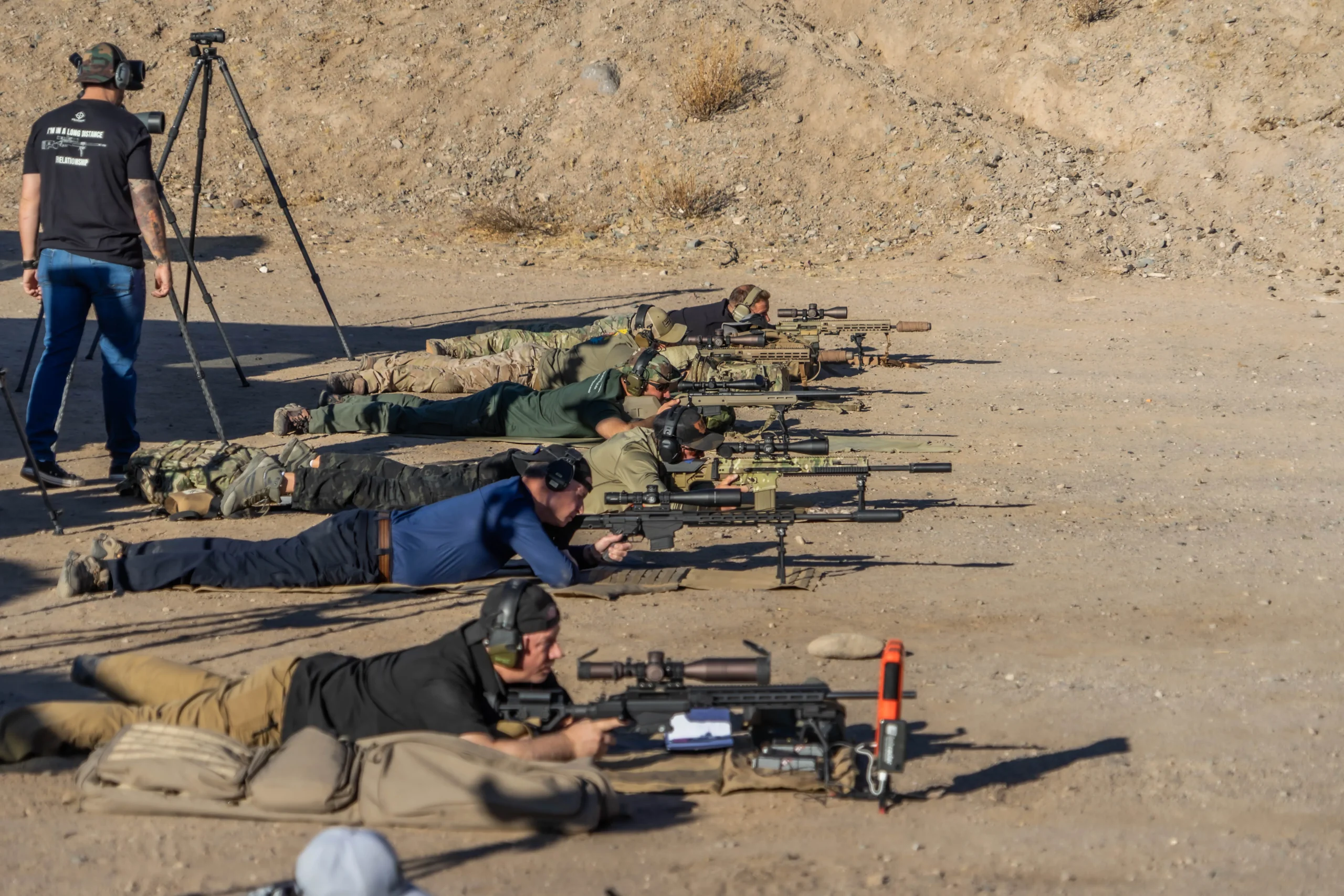
To build real-world competency, you need an environment that matches real-world conditions. You cannot master a firearm if you are confined to a 2-yard-wide indoor lane. The Cowtown facility is meticulously mapped out to support everything from close-quarters defensive pistol drills to extreme long-range precision rifle work.
Spatially Optimized Range Bays & Platforms
-
Dynamic Bays (25 – 100 Yards): Our versatile shooting bays accommodate pistols, shotguns, and rifles. We feature dedicated training zones (Bays 1 through 7), a specialized Zeroing Bay to dial in your optics, the wide-open East 100 bay for expansive tactical drills, and a state-of-the-art Shoothouse designed for force-on-force training.
-
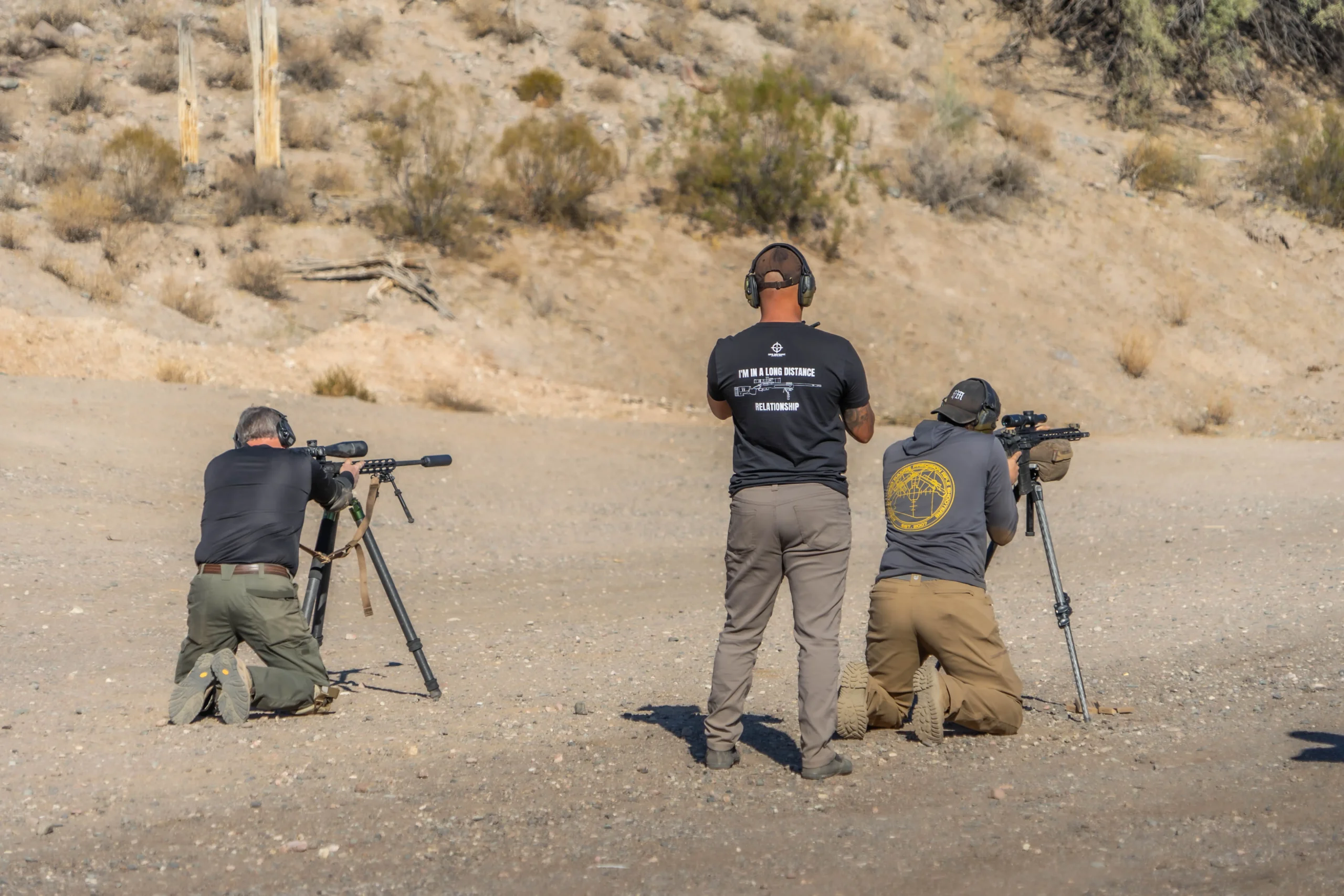
Precision Platforms (Up to 1,000 Yards): For shooters looking to challenge their long-distance skills, we offer four distinct long-range platforms. These platforms support prone, sitting, or benchrest positions over rugged canyon terrain.
Why Instructor Pedigree and Professional Training Matter
Where you train and who you train with directly shapes your shooting mechanics and survival mindset. You shouldn’t learn ballistic physics or self-defense tactics from someone who has only read manuals or passed a basic weekend seminar. You want mentors who have carried a platform as a profession and spent decades sending lead downrange under extreme pressure.
Our entire team of instructors are former military personnel and seasoned law enforcement professionals. They are professionals who have lived the life, carried the weight, and applied these life-saving skills in real-world environments. That elite operational pedigree transfers directly into our training curriculum. Every course is designed to help you master your platform, control your splits under pressure, and confidently own your shots.
Beyond Basic Safety: Elite Specialty Courses
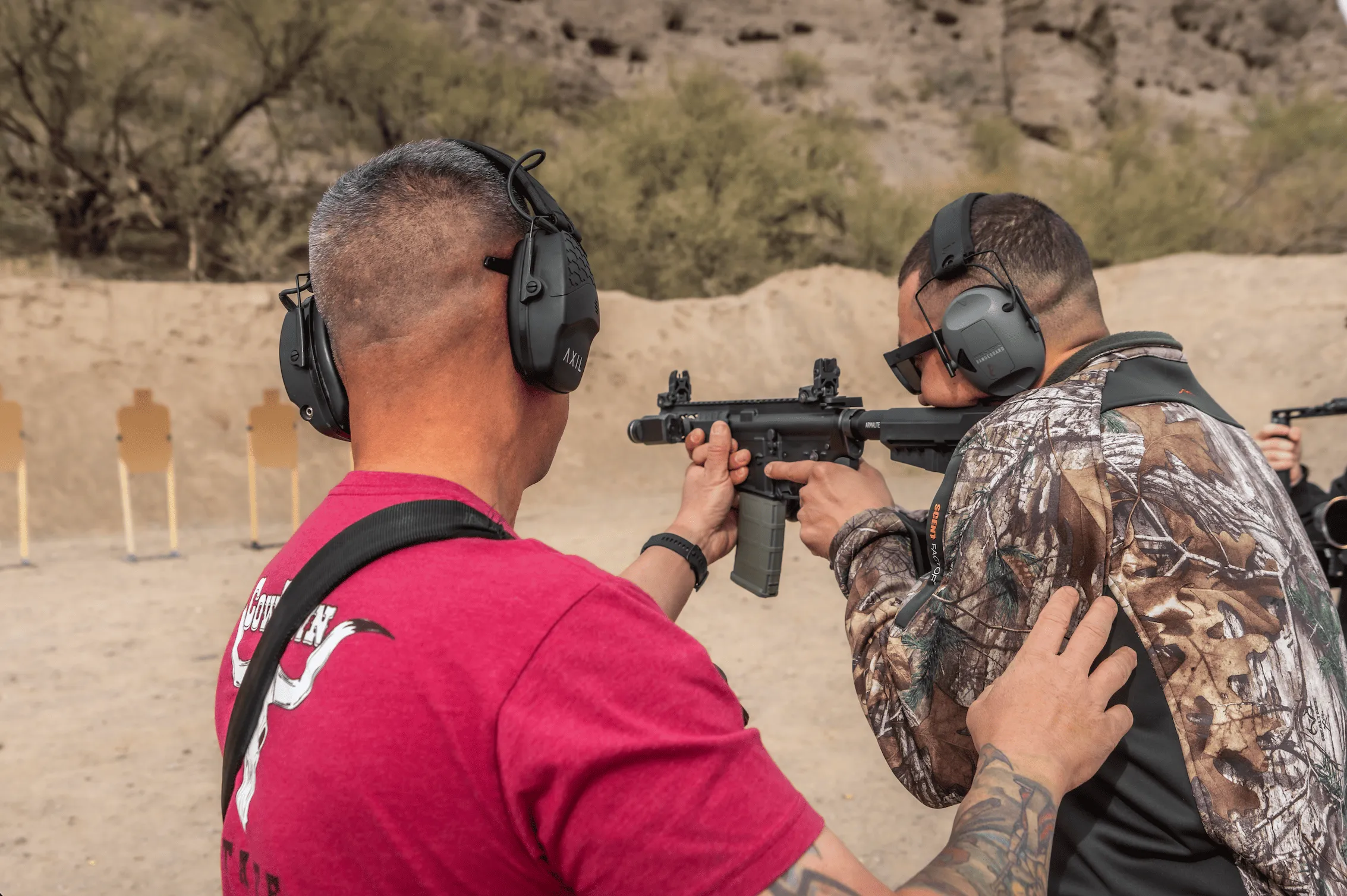
Once you master the fundamentals, we offer advanced, multi-day courses designed to push your skills to the limit:
-
Introduction to Practical Pistol/Competitive Shooting: Learn match rules, stage planning, and range commands for USPSA (United States Practical Shooting Association), IDPA (International Defensive Pistol Association), and competitive organizations.
-
Performance Handgun Workshop: A rigorous 20+ hour, two-day course designed to build a well-rounded and proficient shooter. You’ll work on shooting on the move, dynamic target transitions, and test your skills against our demanding Handgun Performance Test.
-
Defensive Carbine Workshop: A two-day course covering advanced carbine mechanics, target transitions, shooting on the move, and weapon light applications.
Moving Beyond the Basics: Hands-On Range Drills
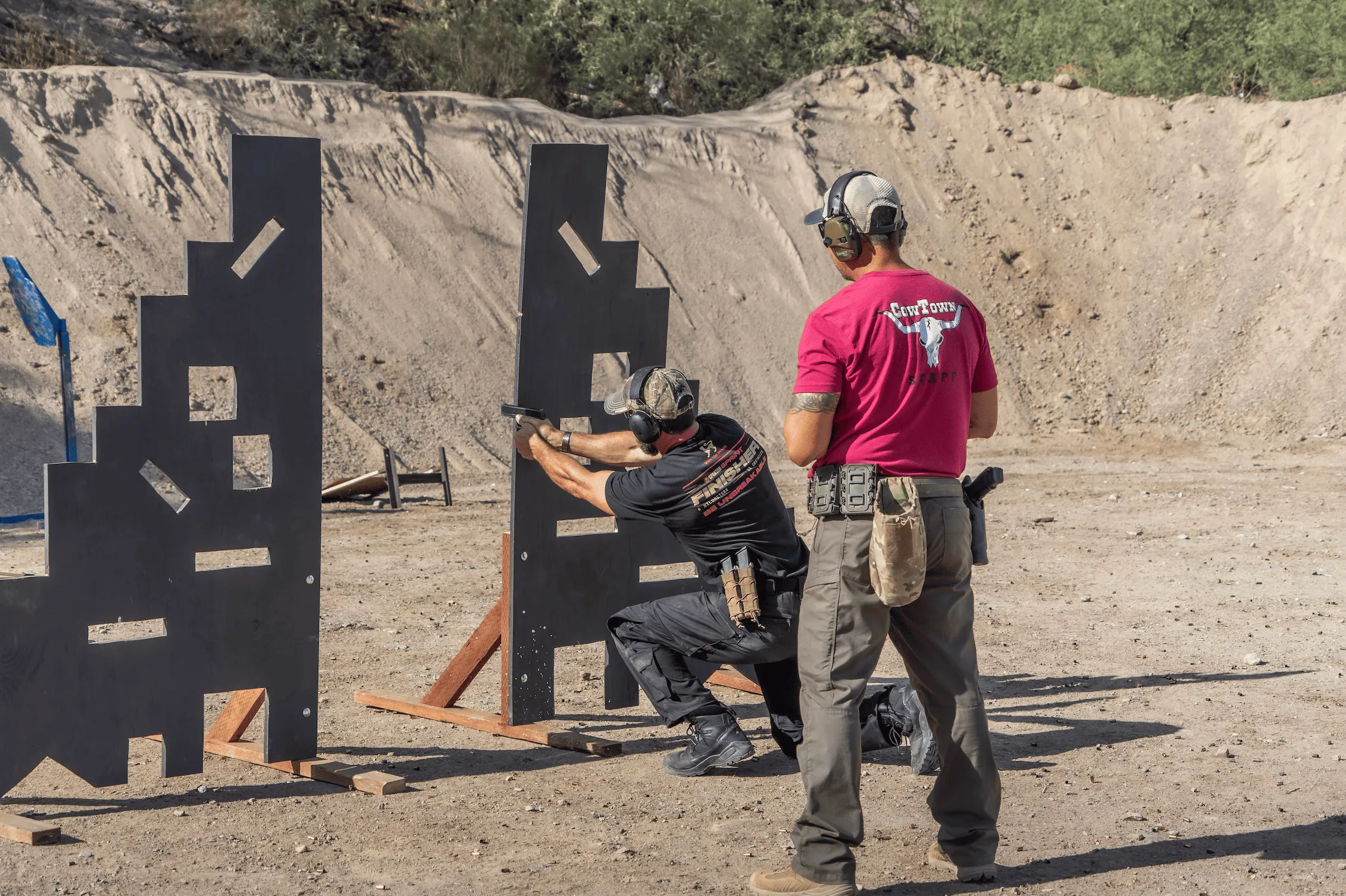
Classroom study is necessary to learn the law, but real-world competency is built through physical repetition. Our open-air, high-desert environment allows us to stress-test your fundamentals with dynamic drills that simulate real-world defensive encounters:
-
Drawing From a Holster: Most defensive encounters require drawing from an inside-the-waistband (IWB) or concealed holster. We teach you how to clear garments and execute a clean draw stroke safely.
-
Shooting on the Move: Threats do not stand still, and neither should you. We train you to maintain visual focus and a stable shooting platform while moving.
-
Barricade Work: Learning how to use cover and concealment effectively, minimizing your exposure while maintaining an optimal line of sight.
-
Low-Light Scenarios: Over half of all defensive shootings occur in low-light environments. We teach you how to manipulate handheld or weapon-mounted lights alongside your system.
Keeping Your Edge Sharp
A gun safety certification course is the starting line, not the finish line. Shooting is a highly perishable skill. If you don’t practice, your mechanics degrade.
While we offer public training courses, securing a Cowtown Range membership gives you the autonomy to utilize our specialized bays and long-range platforms without a Range Safety Officer breathing down your neck. It’s the ultimate way to ensure the skills you learn in class remain rock-solid.
Frequently Asked Questions
What are the prerequisites for advanced workshops at Cowtown?
Our intensive, two-day performance workshops, such as the Performance Handgun Workshop and the Defensive Carbine Workshop, require a foundational course (like Handgun 1 or Carbine 1) or equivalent military/law enforcement experience.
Do I need to be a member to take a course at Cowtown Range?
No. Our training courses are open to the public. However, becoming a member grants you unparalleled, private access to our facility’s tactical bays and long-range steel platforms so you can train on your own terms.
What should I bring to my first training course?
At a minimum, you will need your platform (pistol or carbine), a quality holster, a magazine pouch with 2 to 3 spare magazines, electronic ear protection, impact-rated eye protection, and enough ammunition to run the drills (typically 250 to 300 rounds for basic courses, and up to 1,000 rounds for performance workshops). Always dress for high-desert outdoor conditions.