
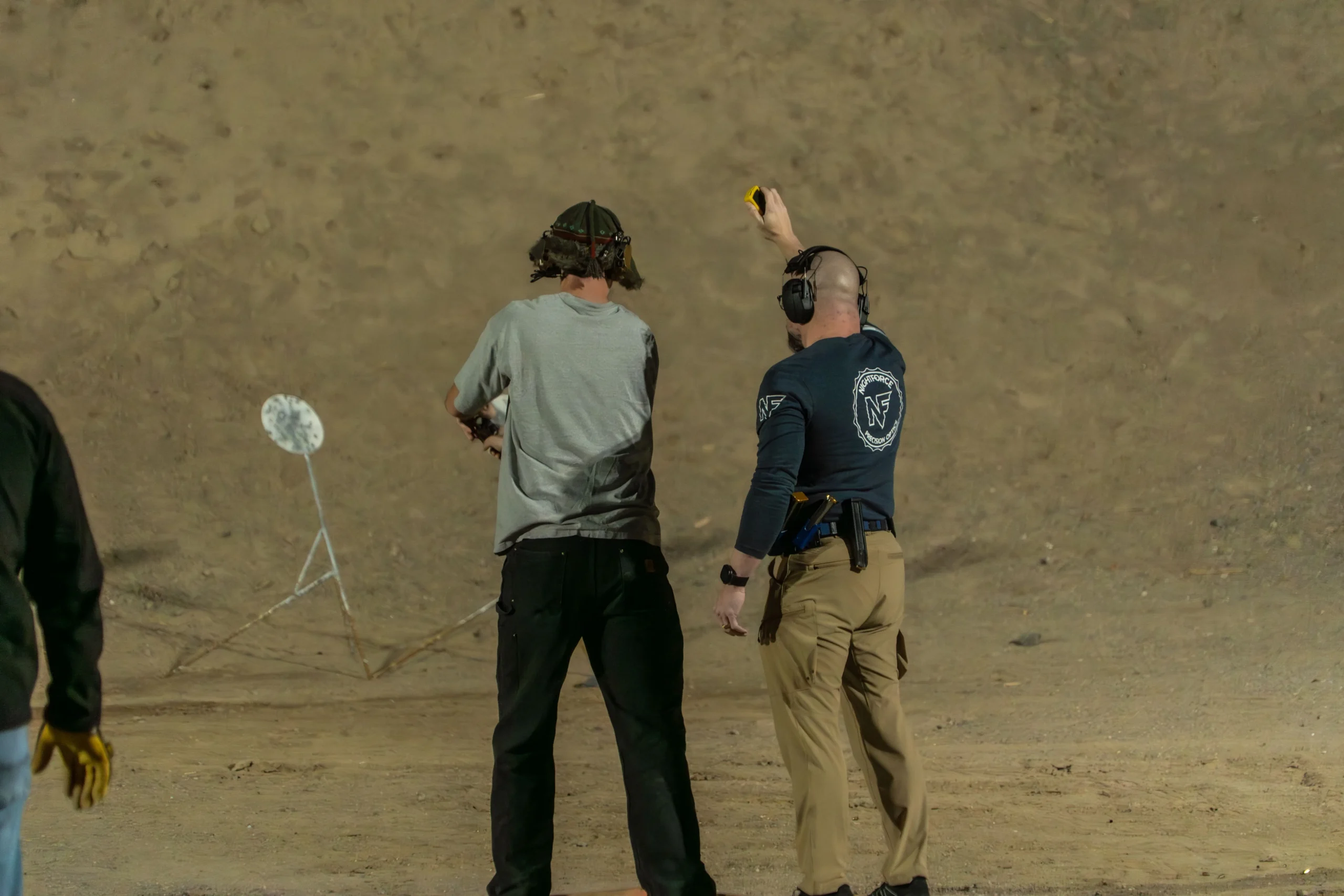
Shooting in broad daylight makes bad habits easy to hide. Soft grip pressure, lazy sight alignment, and sloppy footwork still let you punch paper when sunlight illuminates your sights and your target clearly. Once the sun dips below the Bradshaw Mountains and deep shadows spill across our high-desert terrain, those subtle shortcuts disappear.
When visibility drops across our 78-acre property in Peoria, AZ, simple tasks become deliberate actions. Press-checking a chamber, clearing a malfunction, or running a smooth reload requires tactile familiarity with your platform. Beyond basic weapon manipulation, dark environments warp spatial awareness, skew distances, and make uneven ground harder to navigate. Pushing through these real-world challenges builds true marksmanship, and static lane shooting just won’t cut it. Securing a membership at Cowtown Range gives you the access, terrain, and autonomy needed to develop genuine low-light proficiency.
What Do You Need to Know Before Night Shooting at an Outdoor Range?
Night shooting demands a shift from visual reliance to tactile proficiency. Before stepping onto a low-light line, verify your mechanical zero in daylight, mount a high-candela light to your platform, and carry a separate handheld light for gear management. Navigating mixed ambient lighting, conducting manual chamber checks, and maintaining absolute target identification before engaging keep your session safe, efficient, and lethal.
How Low-Light Operations Stress-Test Your Technique
Shooting in broad daylight lets you rely on easy visual confirmation. Once evening sets in across the range, visual shortcuts disappear, and your raw technique is put to the test.
Low-light operations force a transition from sight-dominant shooting to built-in tactile proficiency. If you have to break your focus downrange to visually check your belt for a fresh magazine, a low-light run will expose that gap instantly.
Working in transitional lighting also introduces real-world variables you simply cannot simulate during a noon session:
-
Photonic Barriers & Lighting Contrast: Moving between lit bay cover and unlit targets downrange creates stark visual contrast, forcing your eyes and optics to adjust rapidly across lighting boundaries.
-
Photonic Splashback: High-output beams blasting directly into close barricades bounce light back into your optics, dulling your sight picture if your beam placement is off.
-
Muzzle Flash Management: Poor stance or improper flash suppressors create temporary vision burn, slowing down follow-up engagements.
-
Spatial Awareness: Reduced lighting downrange warps depth perception and makes navigating uneven desert terrain far more demanding.
Training under actual night conditions forces you to process target identification rapidly, manage your light tools with intent, and keep your focus where it belongs: downrange.
Essential Gear for Low-Light Shooting Operations
Heading downrange after dark without the right setup guarantees frustration and compromised safety. Low-light shooting requires purpose-built equipment that withstands recoil, harsh environment shifts, and extended runtime.
Primary Weapon-Mounted Lights (WMLs)
A quality WML is essential for serious low-light work. Pistol setups should push a high lumen and candela output to cut through ambient shadows and photonic barriers, such as ambient structure lights or handheld tactical beams. Rifle platforms demand similar capability to project usable light across open ground.
-
Mounting Security: Ensure your light mounts cleanly with solid thread-locker on rail screws. Recoil loosens poor fittings quickly under sustained fire.
-
Switch Activation: Choose switches you can actuate naturally without breaking a master grip or shifting your support hand dangerously close to the muzzle.
Handheld Tactical Flashlights
Never rely exclusively on a weapon-mounted light for general illumination. Sweeping a dark area with your pistol light just to search for a dropped piece of gear breaks cardinal safety rules by pointing your platform at non-targets. Carry a high-output handheld light with a rear tail-cap switch to navigate, read gear, and run handheld light techniques like the FBI or Harries method.
Red-Lens Headlamps & Field Illumination
Preserving your natural night vision keeps you aware of your surroundings between strings of fire. A hands-free headlamp with a dedicated red-light setting allows you to load magazines, check target pasters, and adjust optic dials without blasting harsh white light into your eyes or blinding fellow shooters on the firing line.
Optics, Sights, and Target Hardware
-
Optics: Red dot sights and low-power variable optics (LPVOs) with night-vision-compatible or adjustable daylight settings excel in low-light environments. Dial your reticle brightness down to match the ambient lighting so the dot doesn’t bloom or wash out your target.
-
Targetry: Paper targets quickly lose contrast against dark desert backdrops. High-grade AR500 steel targets deliver instant, audible confirmation upon impact, eliminating guesswork when visual confirmation is difficult downrange.
Safety Guidelines for Low-Light Outdoor Ranges
Range etiquette and safety rules do not change when the sun goes down; the stakes simply grow higher. Reduced lighting downrange makes unsafe muzzle directions harder to catch instantly, placing full accountability on every shooter on the line.
1. Confirm Zero Before Sunset
Never step onto a low-light line with an unverified optic or fresh iron sights. Validate your zero during daylight hours. Trying to adjust windage and elevation turrets in dim light while guessing where your shots land leads to wasted ammunition and unnecessary risk.
2. Practice Positive Target Identification (PID)
You cannot engage what you cannot identify. PID means clearly identifying your target, knowing what lies directly in front of it, and verifying what sits behind it. Your light must illuminate the target long enough for your brain to process threat status before your finger contacts the trigger.
3. Tactile Gear and Chamber Verification
When operating in low light, visual chamber checks are unreliable. Develop a reliable tactile method for confirming an empty chamber—inserting a finger into the ejection port and magazine well—before declaring any platform safe or stepping off the firing line.
4. Rigorous Line Communication
Verbal commands must be louder, clearer, and more frequent during night sessions. Before moving downrange, clearing a line, or changing target arrangements, call out your actions clearly to every shooter in your bay. Double-check that all systems are grounded or holstered before anyone steps past the firing line.
Accessing Night Shooting at Cowtown Range
Training under realistic conditions requires facilities built to support dynamic practice rather than restrictive indoor stall shooting. Cowtown Range provides the space, topography, and autonomy serious practitioners need to sharpen their edge after hours.
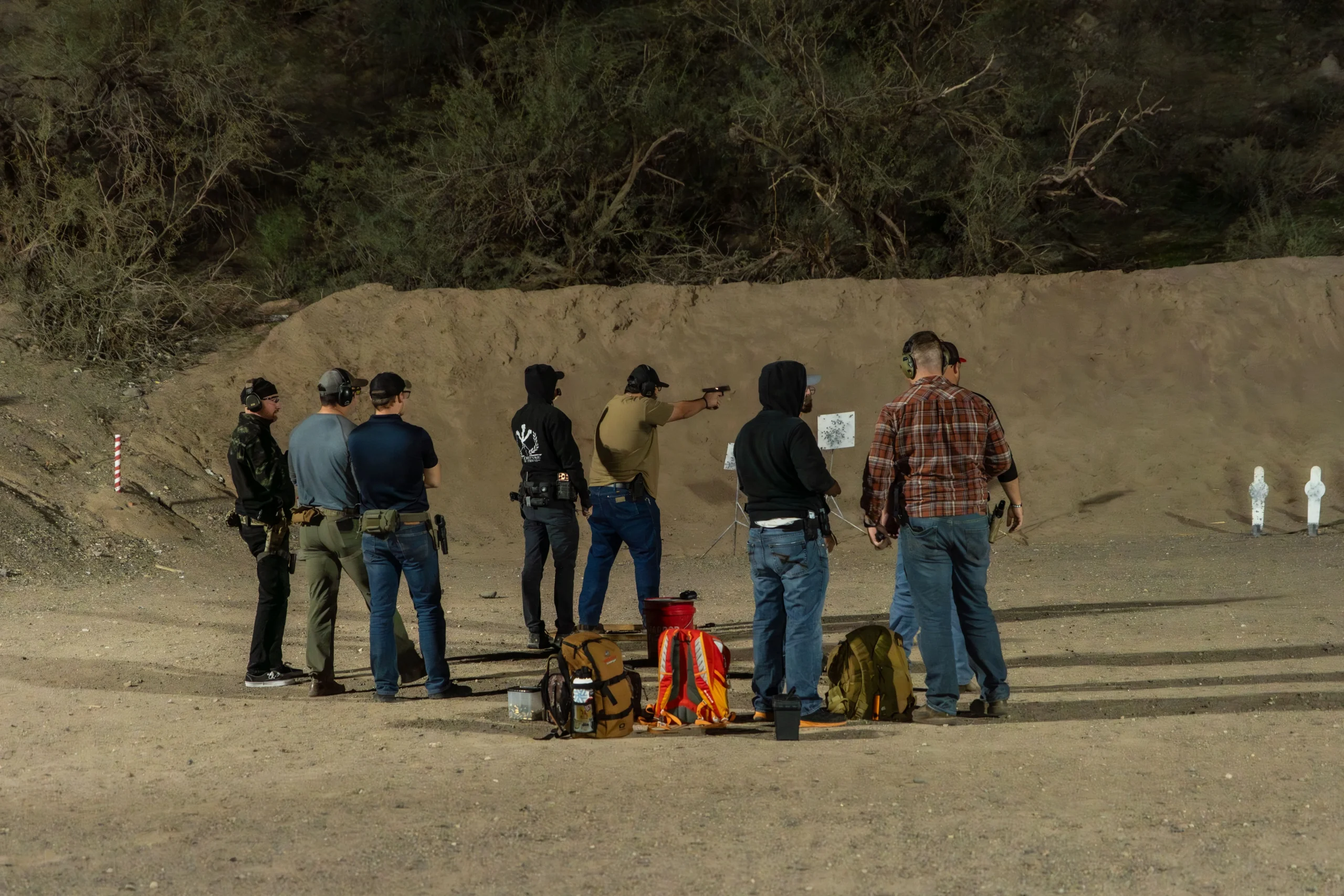
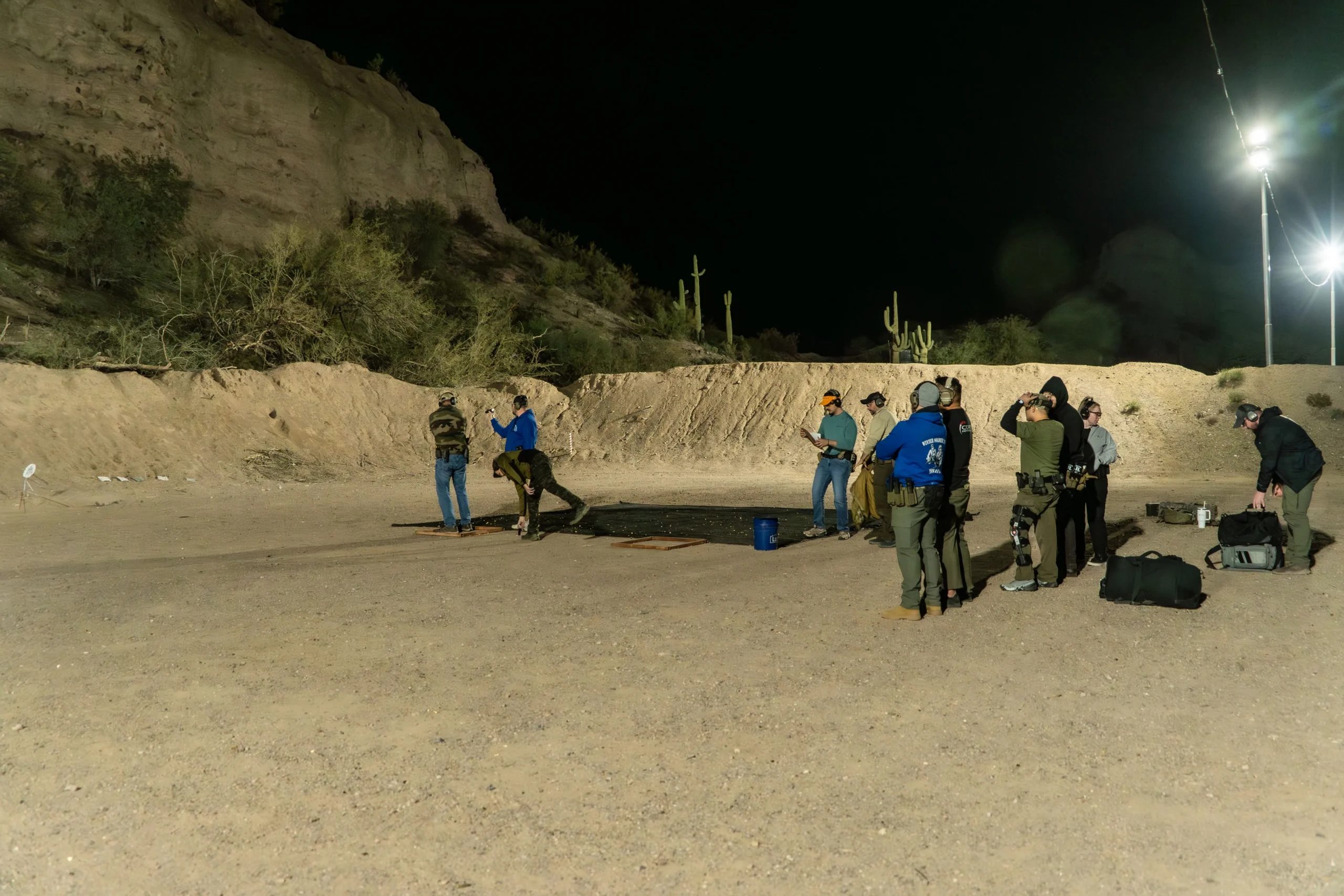
Located in Peoria, AZ, our 78-acre property features 13 specialized outdoor bays along with covered long-range platforms. Our bays provide structured overhead shelter and staging light so you can safely prepare your gear at the bench, while maintaining unlit desert targets downrange. This setup allows shooters to run holster work, movement drills, engage steel at varied distances, and execute realistic low-light scenarios that typical static ranges outright forbid.
Membership Levels & Extended Shooting Hours
We offer flexible access tiers designed to give shooters maximum trigger time based on their schedule and training demands:
-
Bronze membership: Includes 2 hours of daily non-premium bay/platform use, 1 hour of zeroing bay access, and extended evening shooting hours up to 7:00 p.m.
-
Silver membership: Elevates access with 3 hours of daily non-premium bay use, two included training courses per month, and extended night shooting up to 8:00 p.m.
-
Cowtown Range Gold membership: Our premier tier offering 4 hours of daily access across all non-premium bays and platforms, access to premium platforms, priority event registration, four monthly training courses, and night shooting until 8:00 p.m.
Whether you are zeroing a carbine at dusk or running handgun transition drills into deep desert shadows, our self-governed environment trusts experienced adults to train like professionals while respecting the range and fellow shooters.
Common Low-Light Mistakes to Avoid
Avoiding critical mistakes in low-light environments keeps your training sessions efficient, highly productive, and safe.
-
Neglecting Light Splashback: Blasting a high-output beam directly into a bright barricade or close-range interior wall bounces light straight back into your eyes, instantly dulling your vision. Angle your beam offset from reflective surfaces.
-
Constant Light Activation: Walking through a bay with your WML turned on continuously paints your exact position and blinds you to dark spots outside your beam’s narrow cone. Use momentary activation: flash light, identify, move, or engage, then drop back into shadows.
-
Disregarding Battery Maintenance: Cold desert nights drain power quickly. Always pack fresh spare cells in your range bag, and check battery charge levels before heading to the line.
-
Over-Illuminating Red Dot Reticles: Running a red dot on high brightness creates a massive halo effect against darker downrange backgrounds, obstructing the target entirely. Dial your reticle brightness down until the dot is crisp and clear.
Master the Dark: Own Your Craft After Sunset
Standard indoor stalls and restrictive rules will never give you the room or autonomy required to build real capability under night conditions.
At Cowtown Range, we provide the terrain, high-desert bays, and self-governed freedom serious practitioners need to train without micromanagement. Reserve your bay through your member portal or explore our membership options today to lock in extended evening access across Arizona’s premier high-desert shooting facility.
Frequently Asked Questions
What light setup works best for outdoor night shooting?
A dedicated weapon-mounted light featuring high lumen and candela output for handguns or rifles works best. Pair your WML with a handheld flashlight for general navigation and search tasks to avoid pointing your platform at non-targets.
Can I use night vision optics or thermal devices at an outdoor range?
Yes, outdoor facilities with long-range platforms and dedicated bays support night vision devices, active IR lasers, and thermal imaging equipment. Ensure your optics are properly zeroed prior to dark.
Do extended night shooting hours require reservations?
At Cowtown Range, members use an online 24/7 reservation system to reserve bays and platforms up to 21 to 35 days in advance depending on membership tier (Bronze, Silver, or Gold). Booking ahead secures your slot before evening hours end at 7:00 p.m. or 8:00 p.m.
What ear and eye protection should I wear after dark?
Clear or high-contrast safety glasses rated ANSI Z87.1 are mandatory for night shooting. Dark-tinted lenses block too much ambient light downrange. Electronic hearing protection is strongly recommended to easily hear range communications in reduced visibility.