
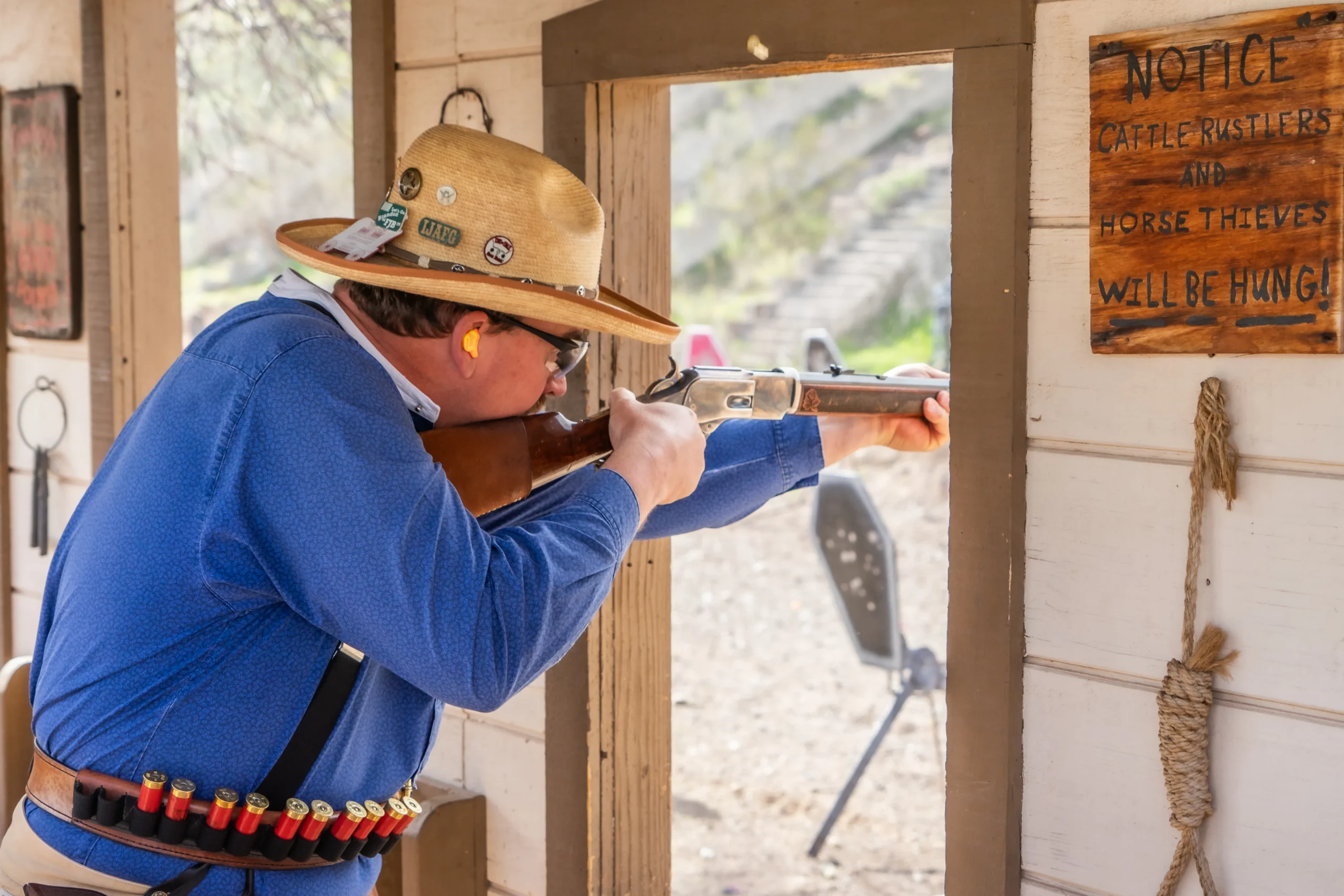
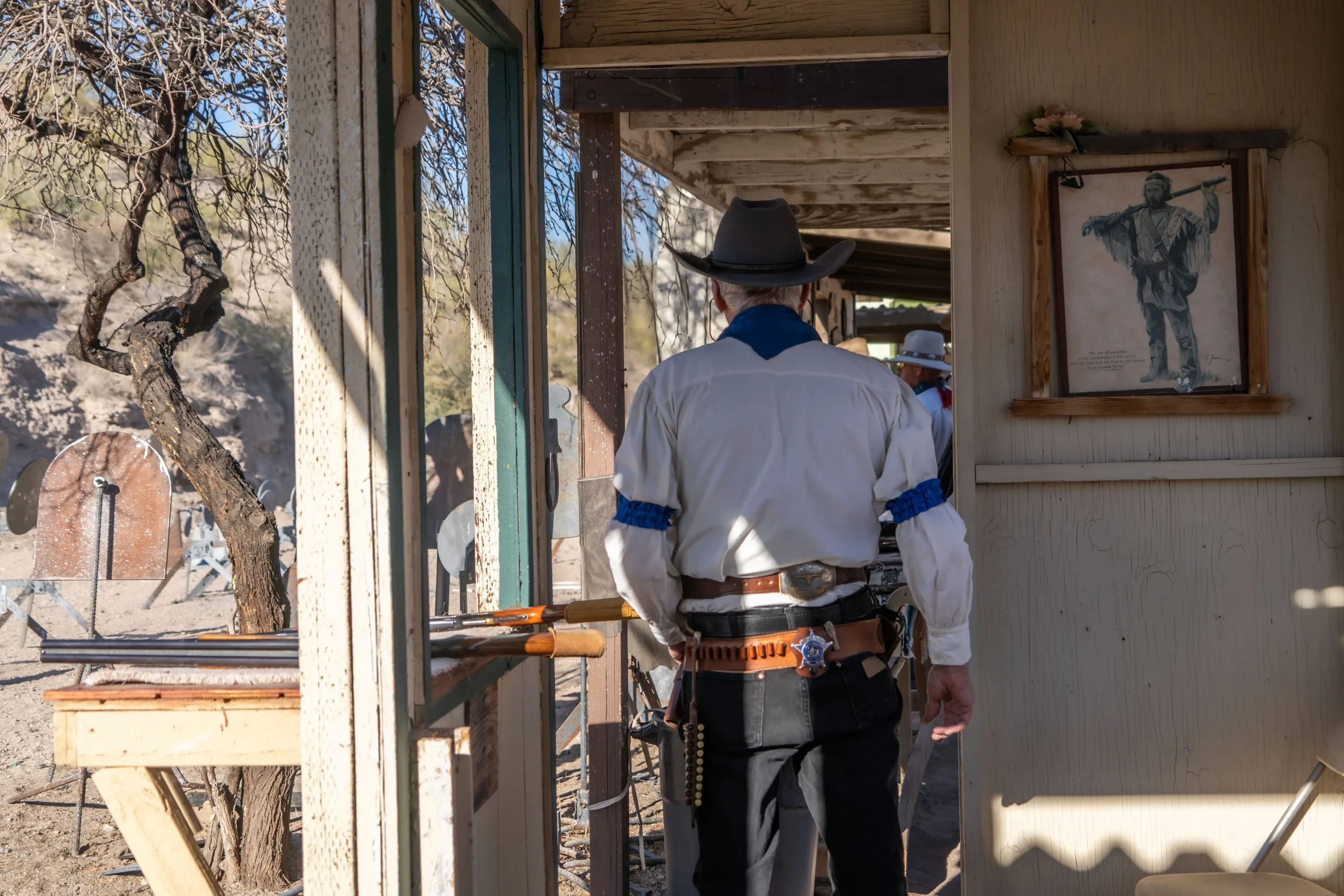
To the uninitiated, stepping onto a Cowboy Action Shooting stage looks like walking onto a movie set. To the serious practitioner, it is a demanding discipline of dynamic firearm manipulation, recoil management, and rapid target acquisition. You aren’t static on a firing line. You move between positions, clear props, transition platforms, and engage reactive steel targets against a shot timer.
Unlike modern practical shooting disciplines dominated by polymer pistols and red dot optics, Cowboy Action Shooting competition relies entirely on iron sights, manual cocking, and tubular magazines.
What Is Cowboy Action Shooting?
Cowboy Action Shooting is a timed, multi-gun shooting sport governed by the Single Action Shooting Society (SASS) where competitors engage steel targets using period-correct firearms from the late 19th century. Shooters run timed courses of fire, called stages, using two single-action revolvers, a lever-action rifle chambered in a pistol caliber, and a vintage-style shotgun. Every match tests speed, accuracy, and gun-handling under a specific Old West theme, with penalties assessed for missed targets or procedural mistakes.
The Gear: What Equipment Is Required?
You cannot roll up to a match with a modern striker-fired pistol and a red dot. Cowboy Action Shooting rules require four specific firearms, a period-correct holster rig, and era-appropriate attire.
1. Two Single-Action Revolvers
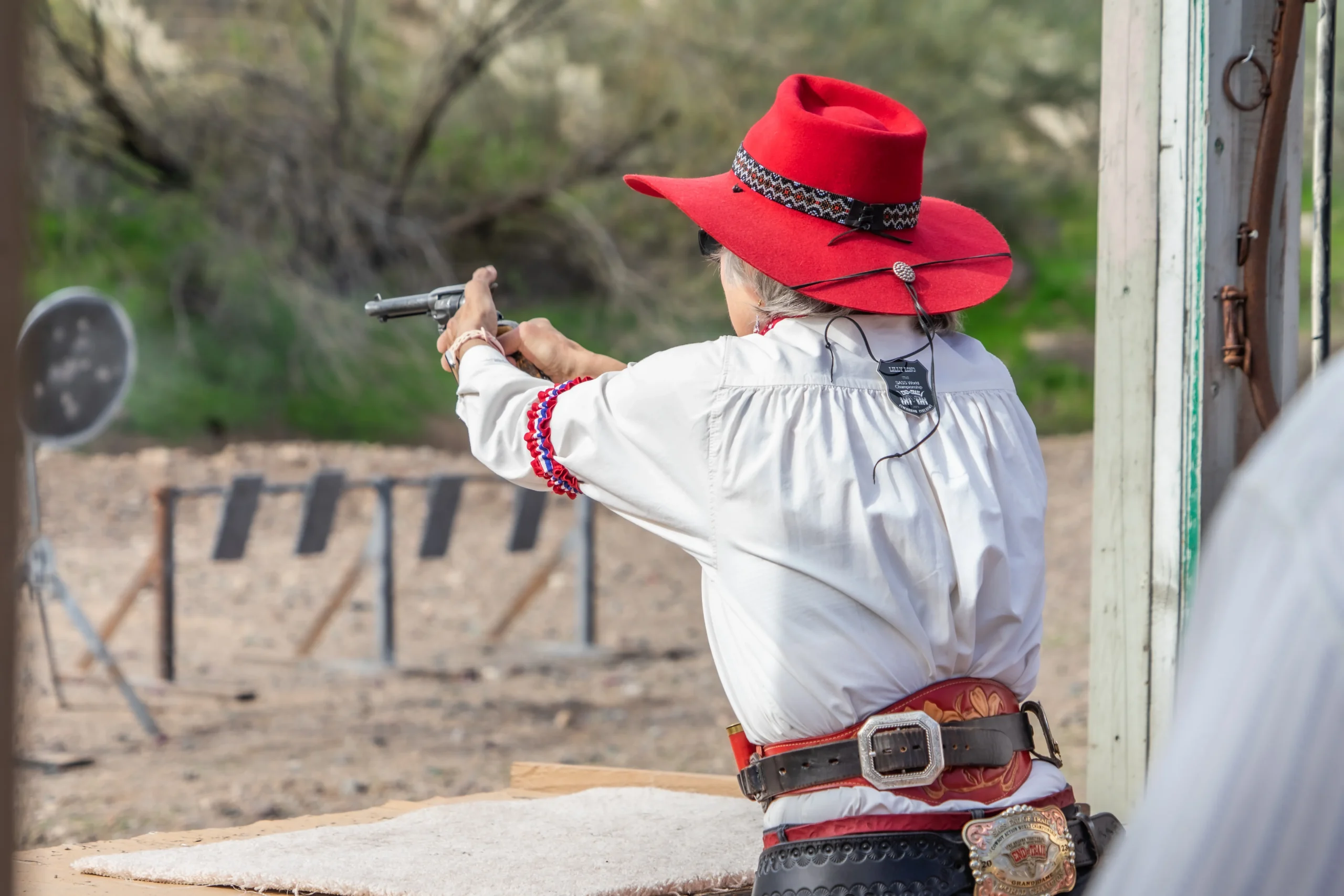
Competitors carry two single-action revolvers chambered in traditional pistol calibers like .45 Colt, .38 Special, or .44-40. The hammer must be manually cocked for every single shot. Popular options include original Colt Single Action Army revolvers, Ruger Vaqueros, and Uberti replicas.
2. A Lever-Action Rifle
Your rifle must be chambered in a pistol caliber matching or compatible with your revolvers (such as .38/.357 or .45 Colt) to simplify ammo management downrange. Tube-fed models like the 1866 Yellowboy, 1873 Winchester, or 1892 lever guns are standard.
3. A Vintage-Style Shotgun
The shotgun acts as the equalizer. Rules permit double-barrel side-by-side shotguns (without automatic ejectors), original or reproduction Winchester Model 1897 pump-actions, or Model 1887 lever-action shotguns. Target loads with lead shot are mandatory—no high-velocity hunting shells or steel shot on the steel plates.
4. Holster Rig & Period Attire
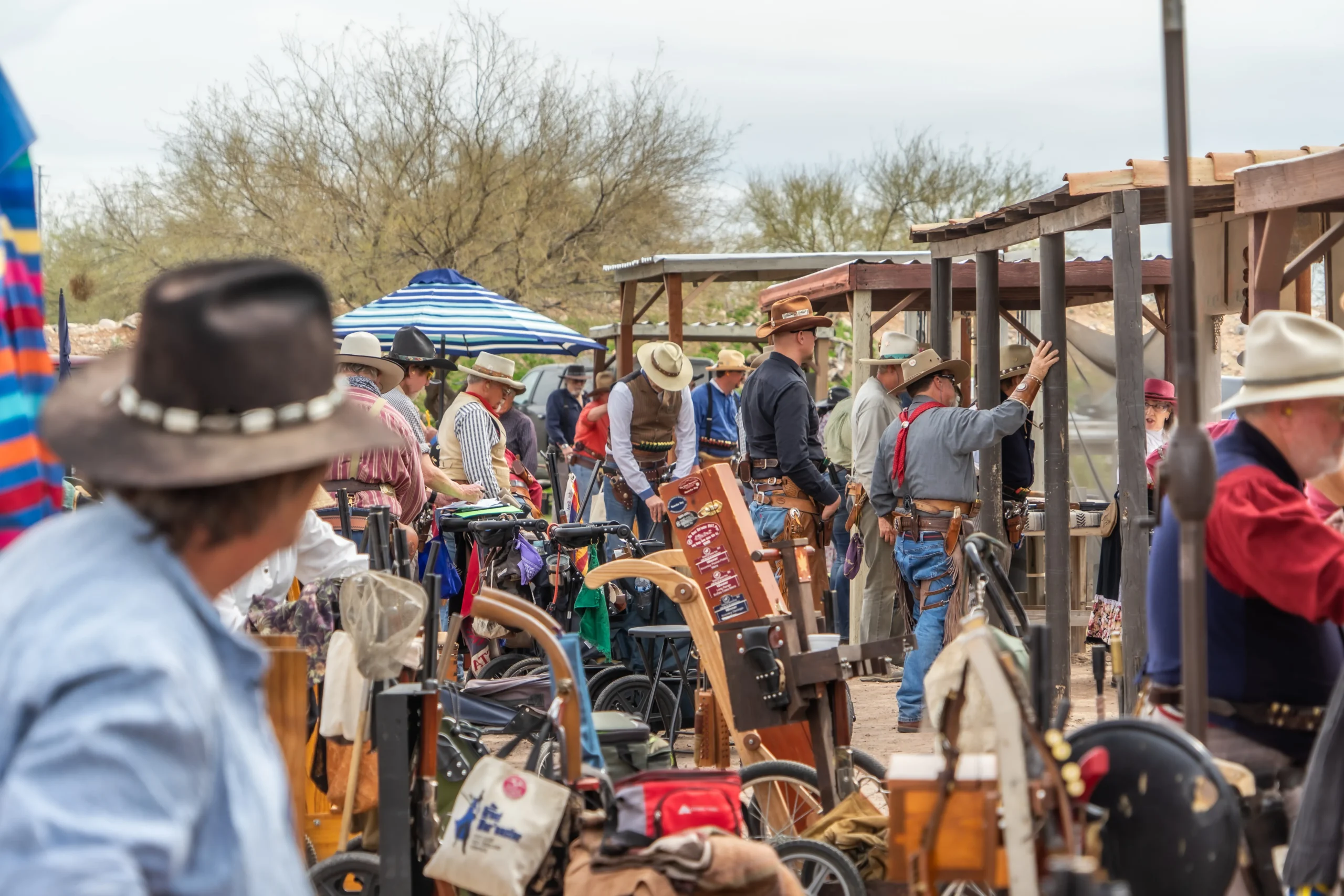
SASS shooting rules mandate that shooters adopt a period alias, a moniker reflecting an Old West character or persona—and dress in late 19th-century attire. That means cowboy boots, western shirts, leather holsters, and wide-brimmed hats. It isn’t just cosmetic; leather rigs dictate how you draw, re-holster, and transition platforms under time.
How Does Cowboy Action Shooting Work Stage By Stage?
A match consists of multiple stages. Each stage presents a unique scenario, target layout, and shooting sequence. Instead of generic lane setups, you shoot from behind saloon doors, chuckwagon props, or natural rock outcroppings.
Here is how a course of fire unfolds on match day:
-
The Briefing & Sequence Review: The Range Officer (RO) reads the stage script. This script outlines the scenario, sets the required order of firearms (e.g., Rifle → Pistols → Shotgun), and dictates the target engagement pattern (e.g., a “Nevada Sweep” or “Knockdown Sequence”).
-
The Loading Table: Before stepping up to the line, you bring your firearms and ammunition to a designated loading table. Under the eye of a loading officer, you load your rifle magazine tube and charge your revolvers—traditionally loading only five rounds per cylinder with the hammer resting on an empty chamber for absolute safety.
-
Staging the Platforms: You bring your cleared platforms to the bay. Your rifle and shotgun are staged on designated props (like a wooden table, windowsill, or barrel) with actions open and chambers empty. Your revolvers remain holstered.
-
The Beep: At the timer’s signal, you execute the scenario. A typical stage might require ten rifle rounds engaged at steel targets downrange, followed by drawing two revolvers to clear five steel targets each, and finishing with four shotgun rounds on reactive knockdown targets.
-
The Unloading Table: Once the last shell clears your platform, you immediately proceed to the unloading table. A safety officer verifies that every firearm is completely empty before you holster up or return platforms to their cases.
-
Scoring: Cowboy Action Shooting scoring relies on total elapsed time plus penalties.
-
Misses: Each missed steel target adds 5 seconds to your time.
-
Procedurals: Shooting targets out of the specified sequence adds 10 seconds.
-
Safety Violations: Sweeping the gallery, breaking 180-degree muzzle lines, or leaving the line with a loaded chamber results in a stage or match disqualification.
-
Why Terrain & Range Real Estate Matter
You can practice basic marksmanship anywhere, but you can’t simulate authentic scenario dynamics in a static, narrow indoor lane.
The environment dictates how you manage movement, footing, and sight pictures under speed. Real terrain introduces changing light conditions, elevation shifts, natural dust, and varying target distances that force you to actively read your sights rather than rely on muscle memory in a sterile box.
That is why facility heritage matters. The historic high-desert training grounds at Cowtown Range were originally constructed in 1973 as an Old West movie set by stunt legend Ron Nix.
Built right into the rugged terrain of Peoria, Arizona, those original facades and natural high-desert contours were later forged into elite tactical training bays used by special operations units. Today, that same terrain hosts competitive shooters who want an authentic, uncompromised outdoor environment.
Common Mistakes New Shooters Make
Stepping into multi-gun competition can feel overwhelming. Most rookie mistakes come down to mental errors rather than marksmanship ability:
-
Blowing the Stage Sequence: Memorizing the target sequence is as important as split times. A procedural penalty wipes out fast draw speeds instantly.
-
Fumbling Shotgun Reloads: Shotgun shells must be staged and loaded rapidly under time. Smoothly pulling shells from a leather belt loop takes deliberate dry-fire practice at home.
-
Over-cocking Revolvers: Cocking a single-action revolver requires a smooth, dedicated sweep of the thumb. Frantic, jerky motions lead to slipped hammers and delayed shots.
-
Ignoring Gun Maintenance: Vintage mechanical designs are full of springs, screws, and hand-fitted parts. Run dirty platforms without proper lubrication, and you will encounter mechanical jams mid-stage.
If you are looking to branch out beyond single-action sports, Cowtown Range also hosts a variety of other shooting matches at Cowtown Range, ranging from modern 2-Gun and 3-Gun matches to long-range precision steel matches on our 1,000-yard platforms.
The Freedom to Master the Frontier
Built on a historic 1973 Hollywood film set, Cowtown Range delivers the high-desert real estate and scenario setups you need to run period platforms, test your speed downrange, and master Cowboy Action Shooting. Step off the static firing line and experience the freedom to train.
Explore Cowboy Action Shooting at Cowtown Range.
Frequently Asked Questions
Is Cowboy Action Shooting suitable for beginners?
Yes. The Cowboy Action Shooting community is known for welcoming new shooters. While the sport requires four firearms, most experienced competitors are glad to mentor newcomers, walk them through stage procedures, and even loan gear at local practice matches so beginners can learn the ropes safely.
Do I have to buy expensive vintage firearms to start?
Not necessarily. Modern, rugged reproductions from manufacturers like Uberti, Pietta, and Ruger are built specifically for the demands of competition and are widely available. Many shooters build their four-gun setup over time, starting with borrowed gear or entry-level revolvers.
How does scoring work in Cowboy Action Shooting?
Scoring uses a time-plus system. Your score for a stage is your raw time on the shot timer, plus any time penalties. Missed steel targets add 5 seconds per miss, while procedural errors (engaged out of sequence) add 10 seconds. The competitor with the lowest total time across all stages wins.
Can I shoot standard high-velocity ammunition in Cowboy Action Shooting matches?
No. Cowboy Action Shooting rules require lead-only bullets fired at controlled velocities to prevent dangerous splatter off steel targets. Jacketed or steel-core ammunition is strictly prohibited on steel bays.