
Carbine Safety Training and Performance Requirements Explained
The typical indoor “lane” shooting facility treats grown citizens like children, forcing you to stand static between plastic dividers while a Range Safety Officer barks arbitrary rules over a loudspeaker. That isn’t training—that’s just turning money into noise. True mastery of your platform demands an environment where you are treated like a professional.
Whether you are looking to secure a solid foundation or push your platform to its absolute limits, understanding carbine safety training requirements is about more than checking a bureaucratic box. Real-world capability requires dynamic movement, working from cover, and manipulating your system under stress.
Before you step onto the high-desert dirt, you need to understand exactly what a comprehensive training progression looks like, how to evaluate course requirements, and what it means to truly own your shots.
To explore our full progression of dynamic rifle systems, check out the Cowtown Range Rifle and Carbine Training portal.
The Reality of Carbine Training Requirements: Law vs. Competency
When discussing requirements for a carbine, there are two distinct categories: legal compliance and tactical competency.
Do You Need a Certificate to Own a Carbine?
In the state of Arizona, there is no mandatory federal or state-level certification required simply to purchase or own a semi-automatic rifle platform. We live and operate in a state that respects the Second Amendment, meaning you have the freedom to purchase your system without asking for government permission. However, legal freedom does not equal technical proficiency.
The Real Requirement: The Responsibility to Master Your Craft
While the law might not force you to take a class, the laws of ballistics and mechanics don’t care about your good intentions. True carbine safety training builds self-governing shooters who are completely reliable downrange. You are responsible for every single round that leaves your barrel. If you cannot clear a double-feed malfunction in the dark, or if you don’t know how to adjust for a full-value wind at distance, your system is just an expensive paperweight.
Forged in Experience: The Pedigree of Your Instructors
A training requirement is only as good as the authority enforcing it. We don’t hire part-time checklist-readers or corporate gun safety lecturers who learned their mechanics from a textbook.
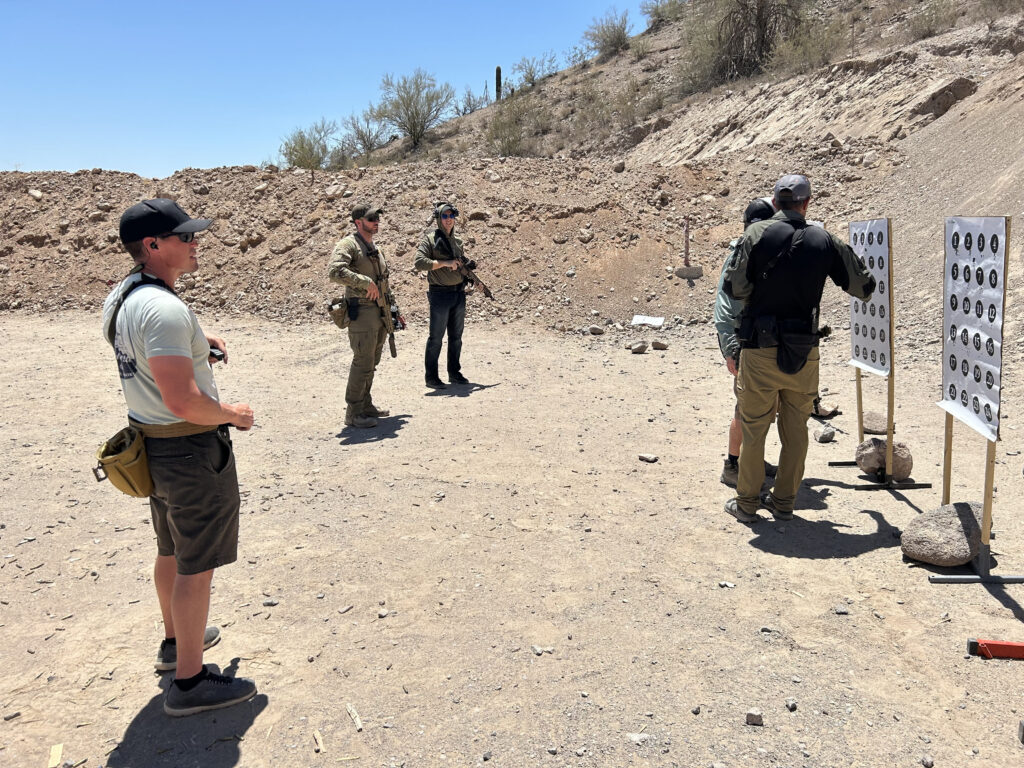
Our instructors are veterans of elite military units and seasoned career law enforcement tacticians. These are professionals who have deployed these same weapon systems under the ultimate stress.
When they evaluate your baseline proficiency or push you past your comfort zone, they aren’t quoting generic manuals; they are passing down battle-tested, peer-validated truths. When you train at Cowtown, you are investing in a direct transfer of real-world knowledge from elite practitioners who respect your drive to master the craft.
Inside a Professional Carbine Curriculum: What Real Training Looks Like
A standard corporate gun safety class wastes hours reading PowerPoint slides. A professional, high-fidelity curriculum splits your time between technical classroom breakdowns and high-intensity, practical application downrange.
Instead of an arbitrary 8-to-12-hour block filled with fluff, effective courses are structured around targeted, 5-hour blocks of high-density training designed to prevent cognitive fatigue and maximize muscle memory.
Navigating the Progression: Prerequisite Requirements
You can’t run a low-light dynamic clearance drill if you haven’t mastered your manual of arms. A professional training facility enforces strict, performance-based prerequisites to ensure that everyone downrange is training at a safe and competent level, keeping the line safe without micromanaging your autonomy.
1. Carbine 1 – Carbine Fundamentals
- Prerequisites: None. Designed for the new shooter or the experienced shooter looking to strip away bad habits and build a flawless foundation.
- The Goal: Build a consistent, durable connection to the gun and master safe manipulation.
2. Carbine 2 – Dynamic Shooting
- Prerequisites: Successful completion of Carbine 1, or verifiable Military/Law Enforcement experience.
- The Goal: Push individual limits of speed and accuracy, developing the ability to self-diagnose and correct errors on the fly.
3. Carbine 3 – Defensive Carbine
- Prerequisites: Carbine 1 and 2, or verifiable Military/Law Enforcement experience.
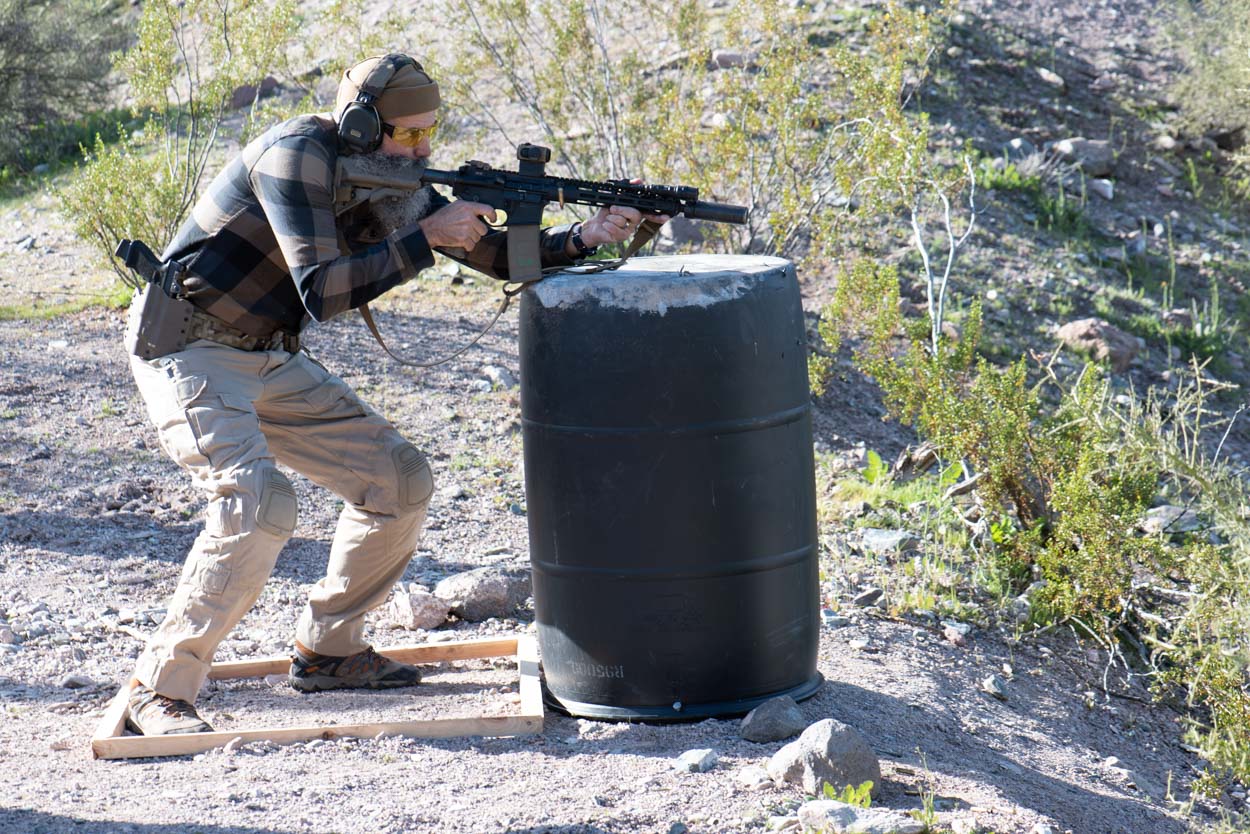
- The Goal: Master a high level of safe firearms handling skills while solving complex tactical problems around cover and barricades.
4. Low-Light Carbine – Weapon-Mounted Light Manipulation
- Prerequisites: Carbine 1, or verifiable Military/Law Enforcement experience.
- The Goal: Overcome photonic barriers and understand how your specific light housing performs in real-world scenarios.
5. Intro to Scoped Carbine
- Prerequisites: Basic Carbine proficiency.
- The Goal: Transition your platform from a close-quarters tool to a precision system capable of punching out past 700 yards.
To understand the layouts where these dynamic scenarios take place, view the Cowtown Range Bay Layouts.
Essential Gear Requirements: Come Prepared to Work
True training requires professional tools. If you show up with sub-par gear, the desert and the drills will expose it immediately.
The Standard Operator Kit Profile
- The Platform: A reliable, semi-automatic rifle system equipped with a sling.
- Ammunition: Clean, factory-loaded rounds matching your course profile (ranging from 200 to 400 rounds minimum).
- Magazine Storage: A dedicated magazine pouch or retention system holding 2 to 3 spare magazines.
- Protection: High-quality ear protection and wrap-around eye protection (mandatory on all platforms).
- Support Gear: A durable shooting mat, note-taking materials to record your zeros and DOPE, and proper tools for your optics.
For specialized, one-on-one system evaluation and custom-tailored drills, you can book a dedicated instructor via Cowtown Private Training.
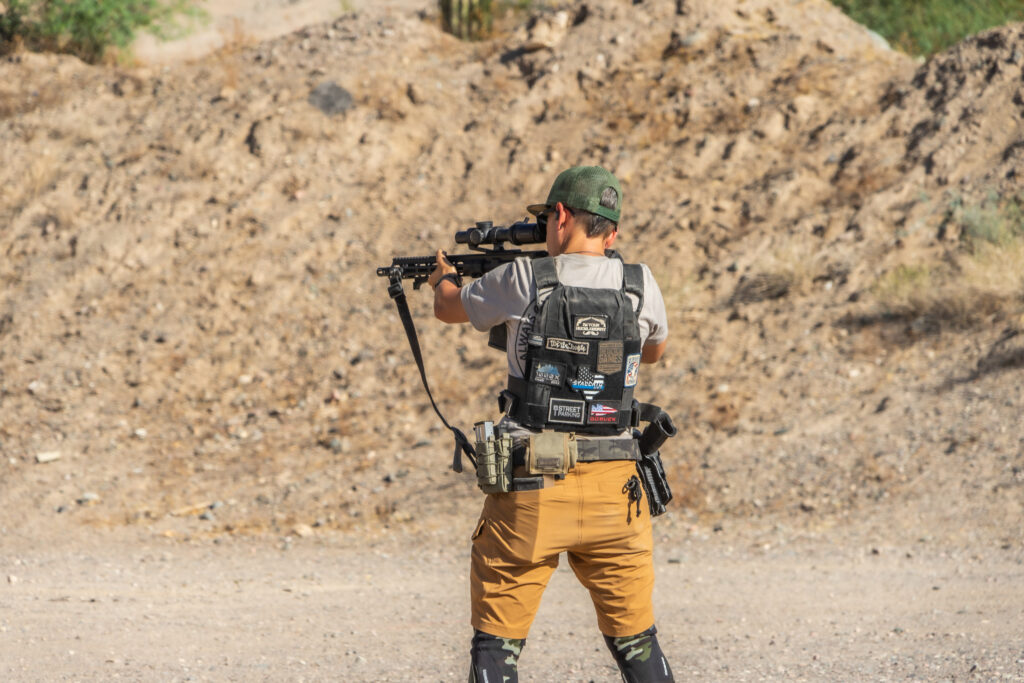
The Cowtown Code: Post-Training Compliance and Self-Governance
Safety isn’t a checklist you complete once to get a paper certificate. Shooting skills are highly perishable. If you aren’t actively running your platform, your edge is dulling every day.
Frequently Asked Questions
What are the standard carbine safety training requirements in Arizona?
Arizona does not legally mandate safety certificates or training courses to purchase, own, or carry a carbine. However, professional training facility requirements dictate that you must master fundamental safety, weapon manipulation, and malfunction clearances before moving into advanced, dynamic shooting courses.
How long does a carbine training certification course take?
While generic corporate courses often take 8 to 12 hours of static lecture, high-fidelity tactical training is structured into highly focused, 5-hour high-density blocks. This format maximizes physical muscle memory and prevents mental fatigue during intensive downrange drills.
Can I use a rented rifle for carbine safety training?
It is highly recommended that you train with the specific semi-automatic rifle platform, optics, and sling configuration you intend to run in real-world scenarios. True mastery relies on building muscle memory tied directly to your personal system layout.
What gear is mandatory for a dynamic carbine training course?
You must bring a reliable, semi-automatic carbine equipped with a high-quality sling, 2 to 3 spare magazines with a dedicated retention system (pouch/belt), wraparound eye protection, active ear protection, and the minimum required clean factory ammunition specified for your specific course tier (typically 200–400 rounds).
Are there prerequisites for taking advanced carbine classes?
Yes. To maintain a safe downrange environment without micromanaging your training, advanced courses require verifiable completion of foundational tiers (such as Carbine 1) or equivalent, or verifiable active military or law enforcement operational experience.