
The Code of the West: Essential Cowboy Action Shooting Safety Rules for Beginners
In the world of competitive shooting, there is nothing quite like cowboy action shooting. It is where the grit of the Old West meets the excitement of modern marksmanship. But before you strap on your six-shooters and step into the dusty arena, you need to understand that at Cowtown Range, we don’t just play cowboy. We are serious practitioners of the craft.
Safety is the foundation of the freedom to train. Whether you are shooting a staged match or practicing your splits, mastery begins with a deep respect for the platform. This guide breaks down the essential cowboy action shooting safety rules for beginners to ensure you represent the community with honor and skill.
The History of Cowtown SASS
The Cowboy Shooters of Cowtown Range are an essential part of our legacy; in fact, without them, we wouldn’t be the range we are today. Founded in 1982 during the days of A Day in the West, Don and Gail Snow formed one of the first cowboy action shooting clubs in the country. The safety rules and match protocols established right here at Cowtown were used in part during the formation of the world famous Single Action Shooting Society (SASS).
To learn more about our roots, visit our About Cowtown page.
The Four Pillars of Firearm Handling
In cowboy action shooting (CAS), you aren’t just handling one firearm; you’re managing a system that typically includes two single-action revolvers, a lever-action rifle, and a period-correct shotgun. At Cowtown, we don’t do accidents—we do responsibility. Every shooter must internalize these four core principles:
- Treat Every Firearmas Loaded: Never assume a firearm is empty. In the heat of a match, your mindset must be constant: the system is live.
- Muzzle Discipline: Your muzzle stays pointed downrange or in a designated safe direction at all times. In CAS, this means being hyper-aware during transitions between your revolvers, rifle, and shotgun.
- Finger Off the Trigger: Your trigger finger stays indexed on the frame until your sights are on target and you have made the conscious decision to engage.
- Know Your Target and Beyond: Every round that leaves your barrel is your responsibility. In our high-desert environment, understanding your backstop is non-negotiable.

The SASS Standard and Governing Safety
Cowboy action shooting is governed by the rules and policies of the Single Action Shooting Society (SASS). SASS provides the framework that keeps this sport fast, fun, and safe.
Essential Safety Equipment for Beginners
You wouldn’t ride into a cactus patch without chaps, and you shouldn’t step onto a Cowtown bay without the right kit. We favor dirt and brass over studio clean, but your gear must be functional and high-quality.
Mandatory Protective Gear
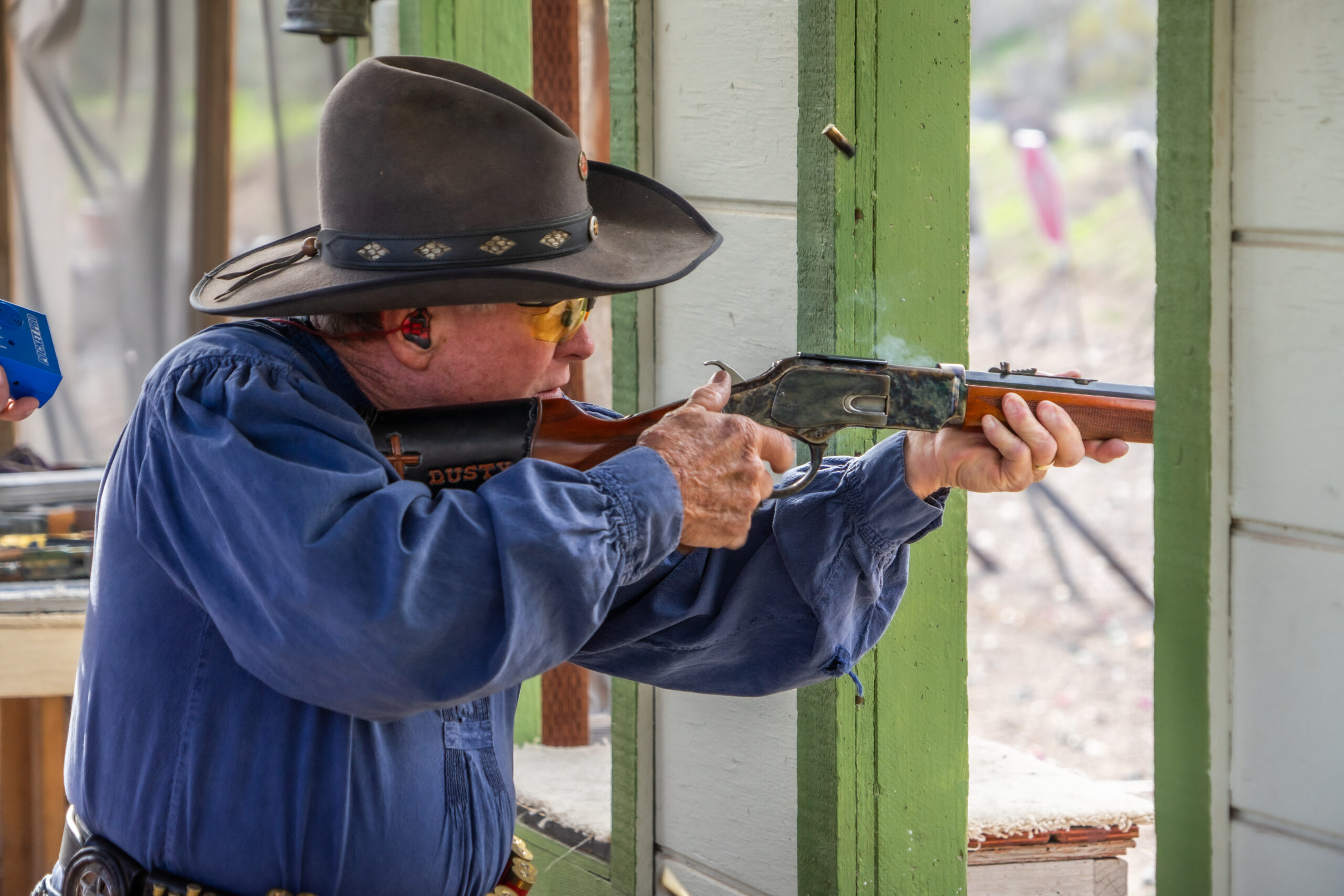
- Eye Protection: Whether you choose period-correct styles or modern shades, ensure your lenses offer sufficient protection for high-volume shooting under the bright desert sun.
- Hearing Protection: From electronic muffs to custom plugs, the choice is yours—just don’t sacrifice your senses.
- The Right Holster: Your leather needs to be sturdy. A floppy holster is a safety hazard during a draw. Your revolvers must stay secure during movement.
Pre-Shooting Equipment Checks
Before you engage, run this checklist:
- Inspect Your Firearm: Ensure your lever-action rifle and revolvers are adjusted correctly and free of obstructions.
- Verify Ammo: CAS requires specific cowboy loads (lower velocity). Ensure your ammo meets the power factor for the match.
- Check Your Rig: Ensure your belt is tight and your holsters are positioned for a safe, vertical draw.
Range Protocols and Procedures
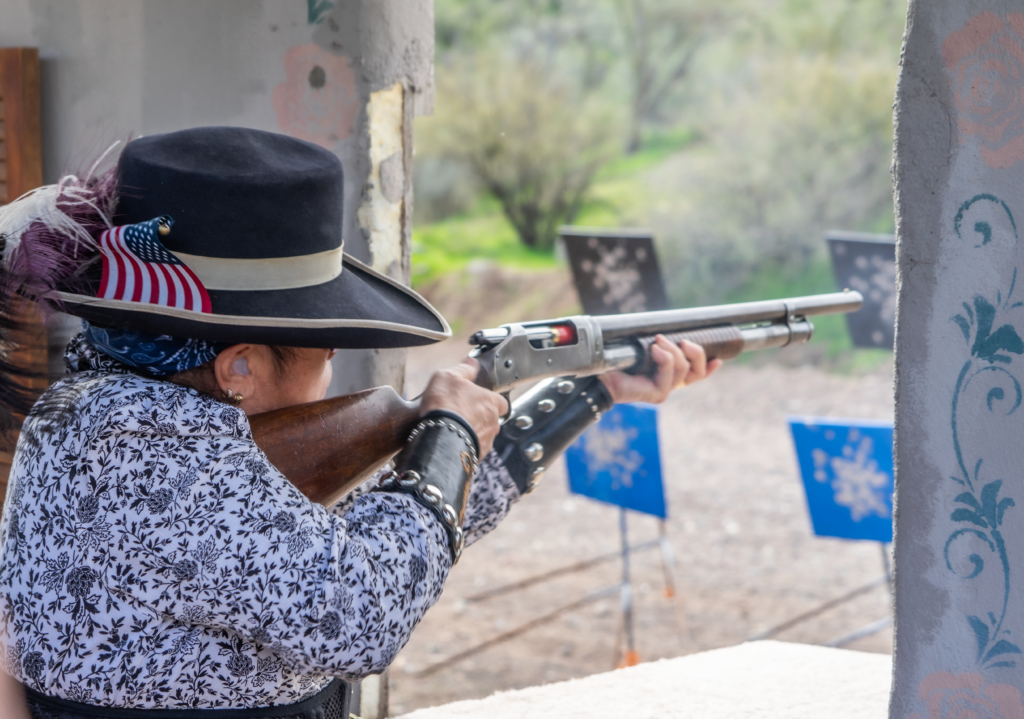
At Cowtown, we bridge the gap between lane shooting and elite training grounds. We treat you like adults, which means we expect you to self-govern and respect the community rules.
- The Loading Table: This is where your match begins. A designated official will verify your firearms are loaded correctly according to the stage description.
- The Unloading Table: After your run, you must proceed immediately to the unloading table to prove your firearms are clear. This is the most critical safety habit in the sport.
- Command Awareness: Listen to the Timer Operator. When they call Cease Fire, every firearm is grounded or holstered immediately.
If you’re ready to see these rules in action, take a look at our upcoming Matches at Cowtown.
Training and Certification
You don’t have to be a veteran operator to shoot here, but you do need to be a student of the craft. We highly recommend new shooters seek out mentorship to flatten the learning curve.
How to Level Up
- New Shooter Orientations: Most SASS-affiliated clubs offer Cowboy 101 orientations. These are the best ways to learn the ropes without the pressure of a major match.
- Mentorship: Don’t be afraid to ask an experienced shooter for advice. The CAS community is known for its willingness to help an inexperienced practitioner.
- Professional Instruction: We host world-class shooters and instructors. While cowboy shooting is a hobby, the fundamentals of grip, stance, and sight alignment are universal across all shooting disciplines.
Why Train at Cowtown Range?
Standard ranges often feel like a library with an officer breathing down your neck. Cowtown Range is different. Born as a Hollywood set in 1973 and forged as a Special Operations training ground during the 90’s and early 2000’s, we offer the liberty to master your craft in a rugged, outdoor environment.
We provide the real estate—the bays, the 1,000-yard lines, the shooting galleries, and the high-desert terrain—so you can focus on your training without being micromanaged. We aren’t a corporate, sterile facility. We are the intersection of the Old West and modern precision.

Join the Community
If you’re tired of one-shot-per-second rules and want a place where you can actually move, draw from a holster, and engage targets with intent, it’s time to change your environment.
Secure your access: How to Become a Member
The desert doesn’t give participation trophies. Respect the range, respect the community, and own your shots. We’ll see you downrange.
Frequently Asked Questions
What are the primary cowboy action shooting safety rules for beginners?
The core safety rules revolve around the “Four Pillars”: treating every firearm as loaded, maintaining strict muzzle discipline (always downrange), keeping your finger off the trigger until ready to engage, and being certain of your target and backstop. Additionally, SASS regulations require revolvers to be carried with the hammer resting on an empty chamber.
Do I need special ammunition for cowboy action shooting?
Yes. To safely engage steel targets at close range, CAS requires lead-only bullets with no jacketing. These “cowboy loads” are designed to splatter safely upon impact rather than ricochet. Standard full metal jacket (FMJ) ammunition is strictly prohibited in this sport.
What is the “170-degree rule” in cowboy action shooting?
The 170-degree rule is a muzzle-governing protocol used during matches. It means your muzzle must never break a 170-degree plane relative to the firing line. Keeping the muzzle pointed safely downrange within this arc ensures the safety of the Timer Operator and other participants on the bay.
Is there a specific dress code for cowboy action shooting safety?
While the sport requires era-appropriate Western clothing for the “spirit of the game,” safety gear remains mandatory. This includes eye protection and adequate hearing protection. Leather holsters must also be sturdy enough to hold revolvers securely during movement to prevent dropped firearms.
How do I get started with cowboy action shooting at Cowtown Range?
The best way to start is by attending a match at Cowtown or a Cowboy 101 orientation. These programs introduce you to the unique safety protocols, equipment requirements, and “Western handles” used in the sport, allowing you to train alongside experienced mentors before competing.