
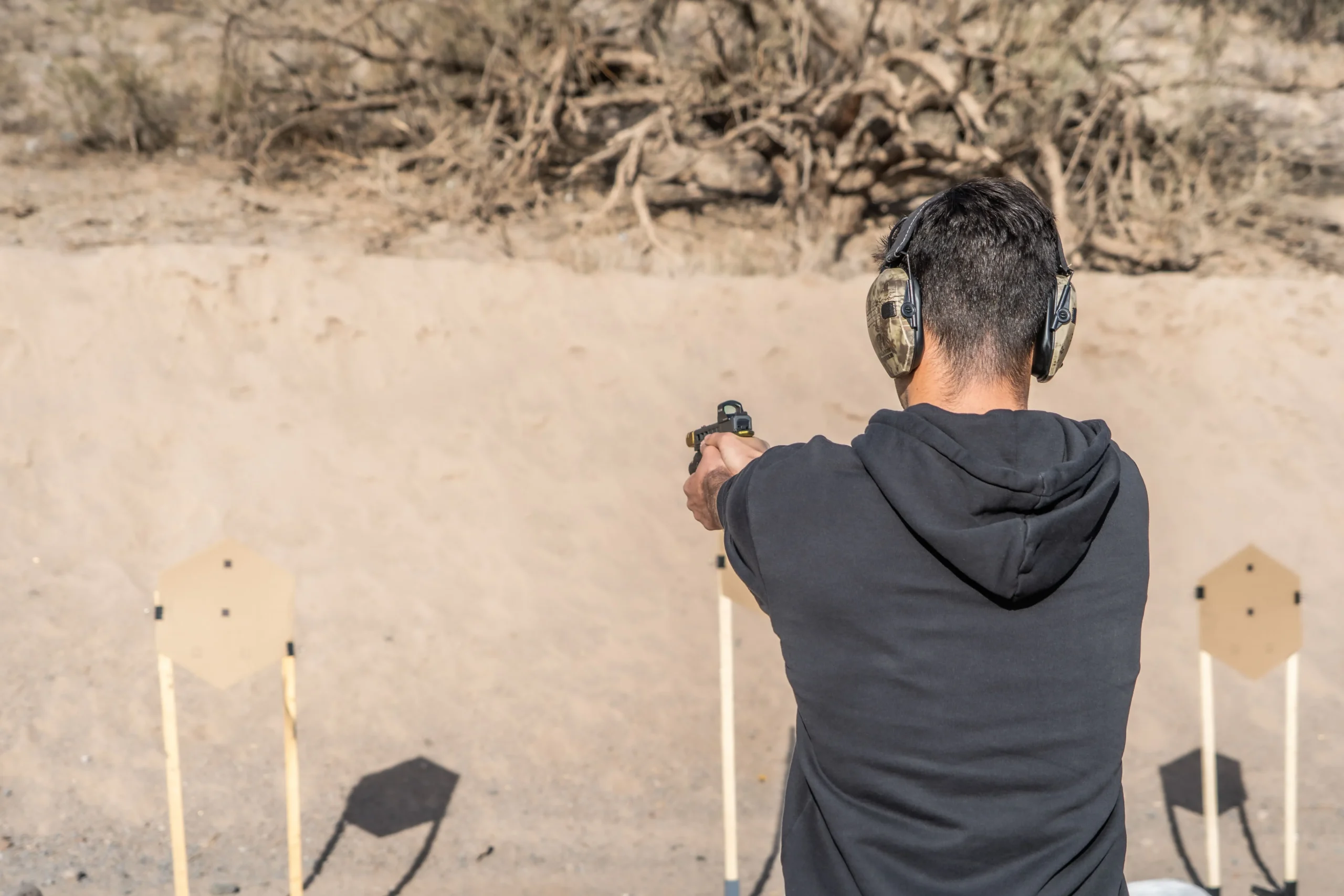
Shooting off a bench at seven yards tricks people into believing they’ve mastered the platform.
It is easy to punch tight groups into paper when your feet are planted, your heart rate is resting at 60 BPM, and nobody is holding a shot timer over your shoulder. But the second you step off the static line and attempt to manage recoil during rapid splits under pressure, those indoor-range marksmanship habits break down.
Whether you are looking to build a clean baseline or step off the bench and onto the dirt, understanding comprehensive handgun training courses helps you audit your actual capability, fix hidden flaws, and choose the right curriculum for your path.
Core Curriculum Breakdown
Handgun training course levels progress from foundational mechanics to advanced dynamic engagements. Beginner courses focus on safety rules, grip, sight alignment, and trigger control. Intermediate courses introduce holster draws, workspace reloads, and stoppage clearances. Advanced courses cover dynamic movement, low-light shooting, cover utilization, and stress-based decision-making in real-world outdoor environments.
Cowtown Marksmanship Progression Path
Handgun Skills: Level-by-Level Overview
To know where you belong downrange, you must measure your current abilities against technical benchmarks, not your ego.
Level 1: Building an Unshakeable Baseline
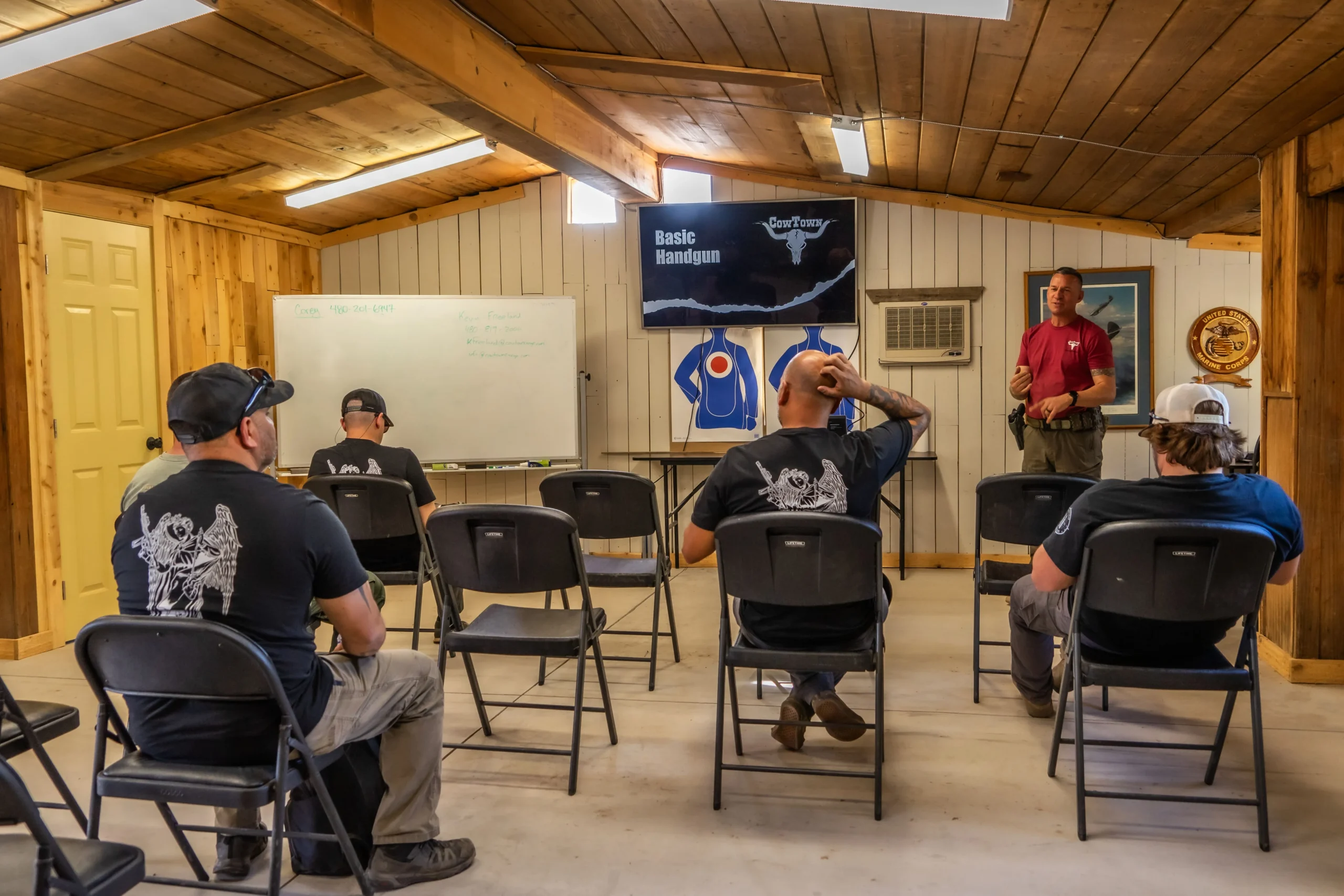
Level 1 is where bad habits are prevented before they turn into muscle memory. If you are searching for a beginner pistol safety course in Peoria, AZ, expect to spend serious time mastering mechanical fundamentals before speeding up your splits.
Core Marksmanship Fundamentals
-
1. Grip: High-tang clamp, 70% support-hand pressure, locked wrist.
-
2. Sight Picture: Equal height, equal light, laser focus on front sight or red dot reticle.
-
3. Trigger Control: Smooth press to the wall, straight-back break, clean reset.
-
4. Follow-Through: Re-establishing sight picture as the recoil cycle completes.
A true foundational course goes past memorizing safety rules—it teaches you how your platform operates during the recoil cycle.
Key Focus Areas & Technical Depth
-
Support-Hand Integration: Most shooters fail to stabilize their handgun because they rely on their dominant hand. Beginner instruction enforces a high-tang grip, clamping down with 70% support-hand pressure to index the frame and manage muzzle rise.
-
Sight Alignment vs. Sight Picture: Learning the distinction between aligning iron sights (equal height, equal light) or indexing a red dot reticle, and placing that visual alignment onto the target plane.
-
Diagnostic Trigger Control: Identifying shooting errors like slapping the trigger, anticipating recoil, or pushing the muzzle down downrange.
-
Cold-Bore Mechanics: Establishing your baseline performance on a cold target without warming up first.
Building this baseline takes deliberate repetitions. Expect to send 150 to 200 rounds downrange while instructors diagnose your grip geometry and trigger press.
Level 2: Holster Work, Manipulations, and Speed
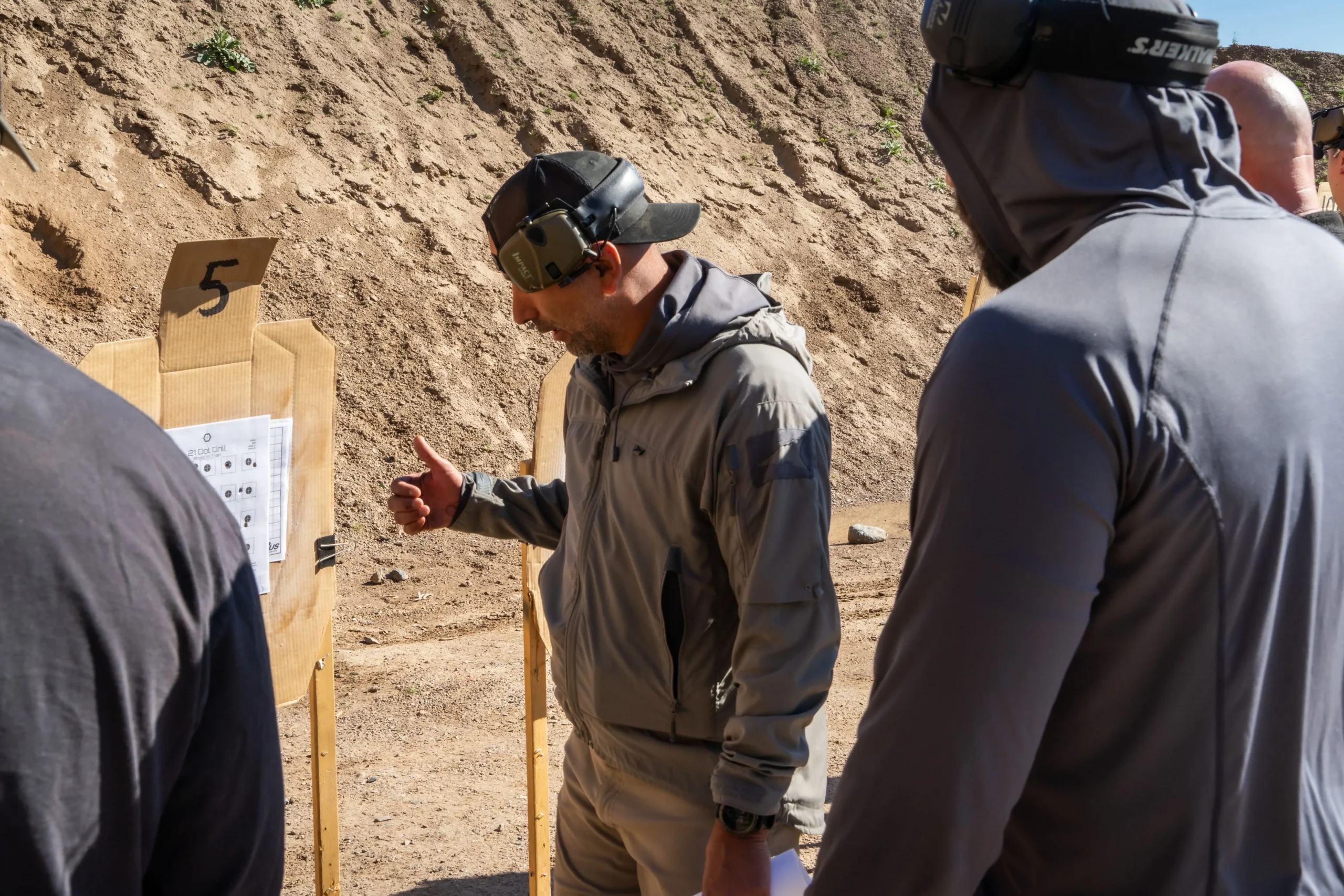
Transitioning from Level 1 to Level 2 is where static range shooters usually hit a wall. For those looking through handgun training levels in Phoenix to build practical, real-world skill, Level 2 drops the static bench and puts you straight into holster work.
Mastering the Intermediate Handgun Draw Stroke
The modern four-count draw stroke is designed for efficiency and safety under speed.
-
Establish Grip & Clear: The primary hand drives deep into the beaver-tail to secure a full master grip, while the support hand indexes high on the chest.
-
Rotate & Clear Leather: The weapon clears the holster body and instantly rotates toward the threat, establishing an early orientation line.
-
Meet in the Workspace: Hands join high in the chest workspace, building full 360-degree grip pressure before the gun reaches eye level.
-
Press Out & Drive Sights: The platform presses directly toward the target, tracking the sight picture as the gun reaches full extension.
Mechanical Clearances and Workspace Reloads
Intermediate courses force you to solve mechanical problems without looking down at your hands. You will train to keep your eyes up toward the threat while keeping the platform in your workspace:
-
Emergency / Slide-Lock Reloads: Dropping empty magazines smoothly, driving fresh brass home, and releasing the slide while maintaining visual awareness of your environment.
-
Type 1 Malfunctions (Failure to Fire): Immediate action via “Tap-Rack-Assess” when you hit a dead trigger.
-
Type 2 Malfunctions (Failure to Eject / Stovepipe): Clearing a trapped casing out of the ejection port without destroying your cadence.
-
Type 3 Malfunctions (Double Feed): Executing complex clearances—locking the slide back, stripping the magazine, working the action, reloading, and returning to the target plane.
Taking an intermediate handgun draw stroke course pushes your round count to 350+ rounds, replacing hesitation with smooth, automatic mechanical skill.
Level 3: Advanced Defensive Pistol Tactics & High-Desert Operations
Advanced training isn’t just about faster shooting; it’s about solving complex problems while managing stress.
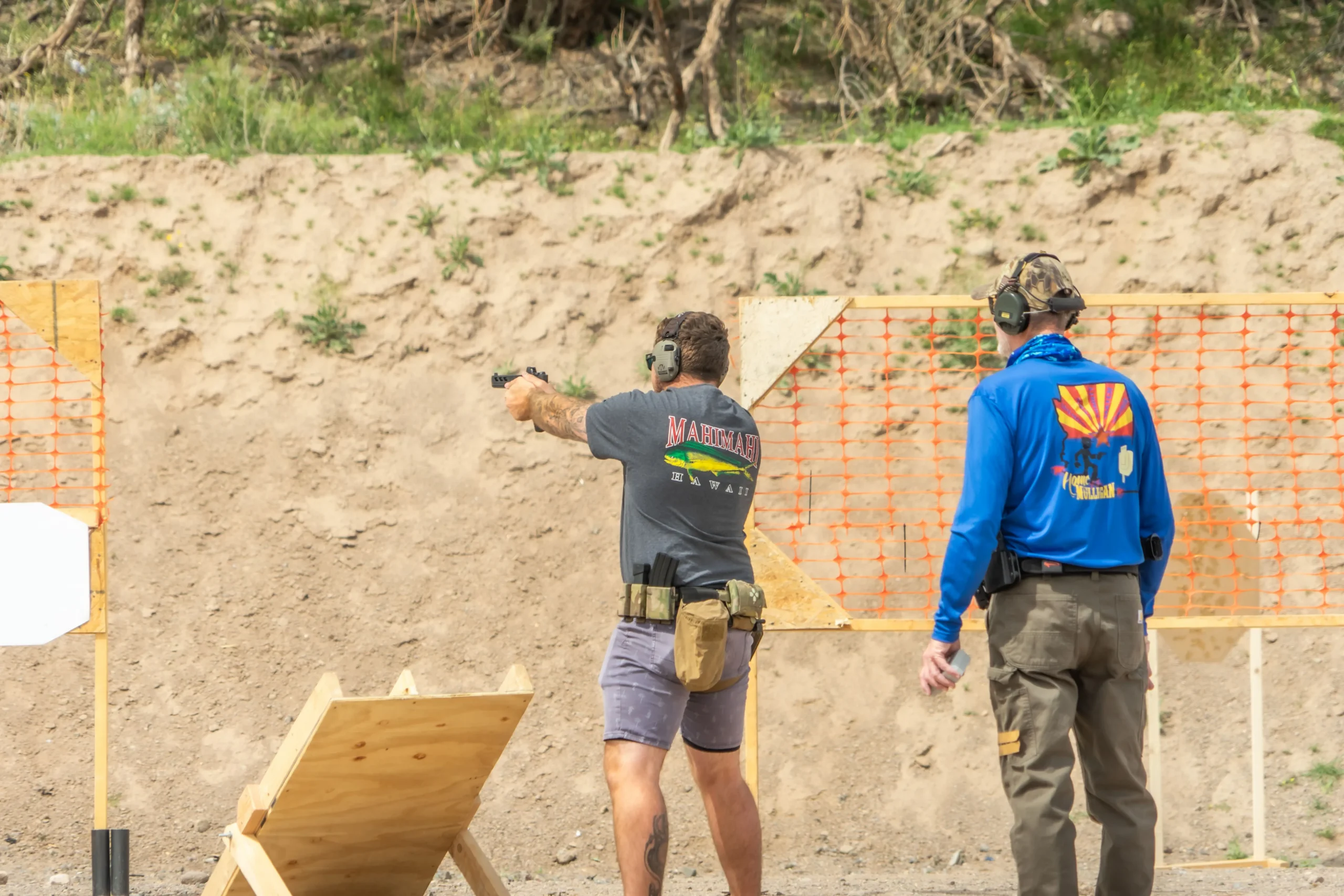
When you step into advanced defensive pistol tactics, you leave the flat range behind. You work in wide-open, high-desert outdoor bays where you move, communicate, shoot around barricades, and clear obstacles.
Advanced Operational Skillsets
-
Dynamic Movement & Shooting Off-Axis: Breaking off the line of attack instantly. Learning how to smooth out your footwork so your upper body acts as a stable shooting platform while moving forward, backward, and laterally.
-
Cover & Concealment Mechanics: Understanding the difference between stopping rounds (cover) and hiding your position (concealment). Managing mechanical offset—accounting for the height difference between your sight line and your barrel bore when shooting over or around cover.
-
Low-Light & Weapon-Mounted Light (WML) Operations: Navigating PID (Positive ID) in low-light environments. Mastering handheld techniques alongside WML activation under time constraints.
-
Positional Shooting & Stress Drills: Delivering accurate hits from awkward positions (urban prone, side prone, seated) while keeping your pulse spiked via physical exertion and shot timers.
Born as a Hollywood Western set in 1973 and forged as a Special Ops training ground, our high-desert training facility was built for this level of practical training. You aren’t standing in a narrow indoor lane; you are running drills on the dirt where elite operators honed their craft.
Prerequisites: Am I Ready to Step Up?
Before enrolling in an advanced course, evaluate your current skills honestly. Overestimating your baseline creates safety hazards downrange and slows down the rest of your bay.
Course Prerequisite Checklist
-
Rule Adherence: 100% adherence to safety rules without needing reminders.
-
Holster Safety: Can draw from Kydex/duty holster safely without muzzling body or hands.
-
Workspace Reloads: Performs emergency reloads inside the workspace while keeping eyes up.
-
Malfunction Drills: Clears Type 1 and Type 2 malfunctions within 3 seconds under a timer.
-
Accuracy Standard: Holds a 6-inch grouping at 15 yards without support from a bench.
If you missed any of those points, taking another fundamentals course isn’t a step back. It is how you build a rock-solid base before adding speed, movement, and stress.
If you prefer personalized coaching to fix specific bad habits, booking one-on-one private firearms instruction will accelerate your progress faster than a group class.
Own Your Progression Downrange
Skills fade quickly if you don’t use them. Shooting tight groups off a static bench won’t prepare you for real-world scenarios. True confidence downrange comes from real practice on the dirt—drawing from a holster, running the workspace, and making smart decisions under stress.
Audit your current skill set honestly. Decide where you stand, select the right course level for your goals, and step onto the range to build real-world capability downrange.
Frequently Asked Questions
Do I need a range membership to attend these training courses?
No, non-members can register for open training classes. However, if you want to practice what you learned on your own, exploring Cowtown Range membership options gives you dedicated access to our high-desert facilities. Depending on your goals, you can look into our Bronze Membership tier, upgrade to a Silver Membership plan, or step up to full Gold Membership status to train on your own schedule.
How do I self-assess my skill level before signing up?
Check your cold-bore performance on a standard B-8 target at 7 yards. If you struggle with weapon handling, loading, or keeping hits inside the 8-ring without warming up first, start with Level 1. If you can perform a safe holster draw and clear basic malfunctions under a shot timer, you are ready for Level 2.
What holster setup do I need for intermediate and advanced classes?
You need a high-quality, rigid Kydex or duty-style holster molded specifically for your platform, attached to a stiff belt system. Soft nylon, shoulder, cloth, or flexible holsters are unsafe for rapid re-holstering and are generally prohibited in dynamic courses.
What is the average round count for these training levels?
Beginner courses usually run 150 to 200 rounds to focus heavily on mechanics. Intermediate courses require around 300 to 400 rounds to build muscle memory through repetition. Advanced courses often require 500+ rounds, as you run complex multi-target drills, low-light scenarios, and dynamic movement courses.