
Searching for firearms training in the Valley quickly reveals a stark divide. On one side are generic indoor ranges that enforce rigid, arbitrary rules and treat adult shooters like children. On the other are serious platforms built for real-world development, mechanical skill, and self-governance.
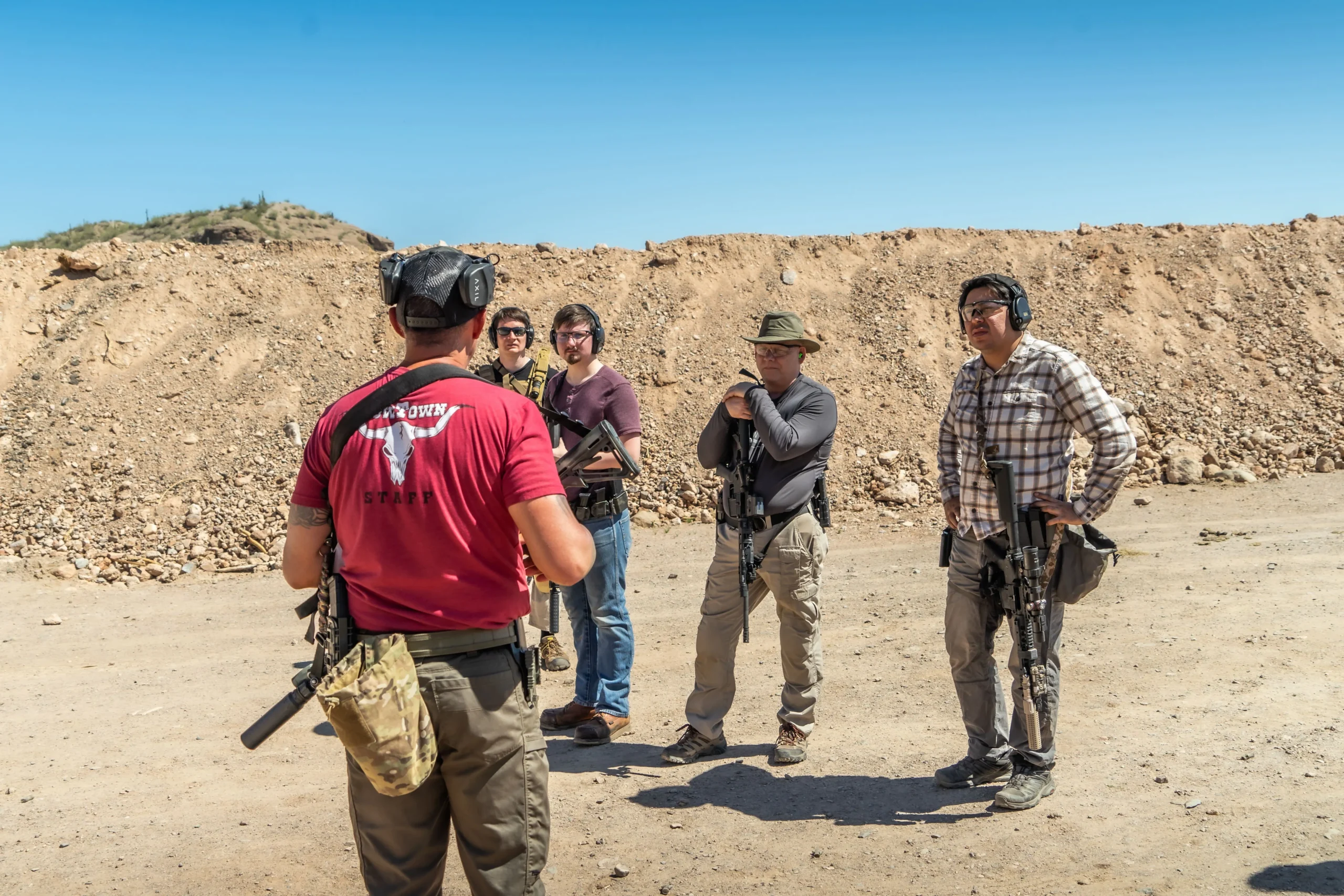
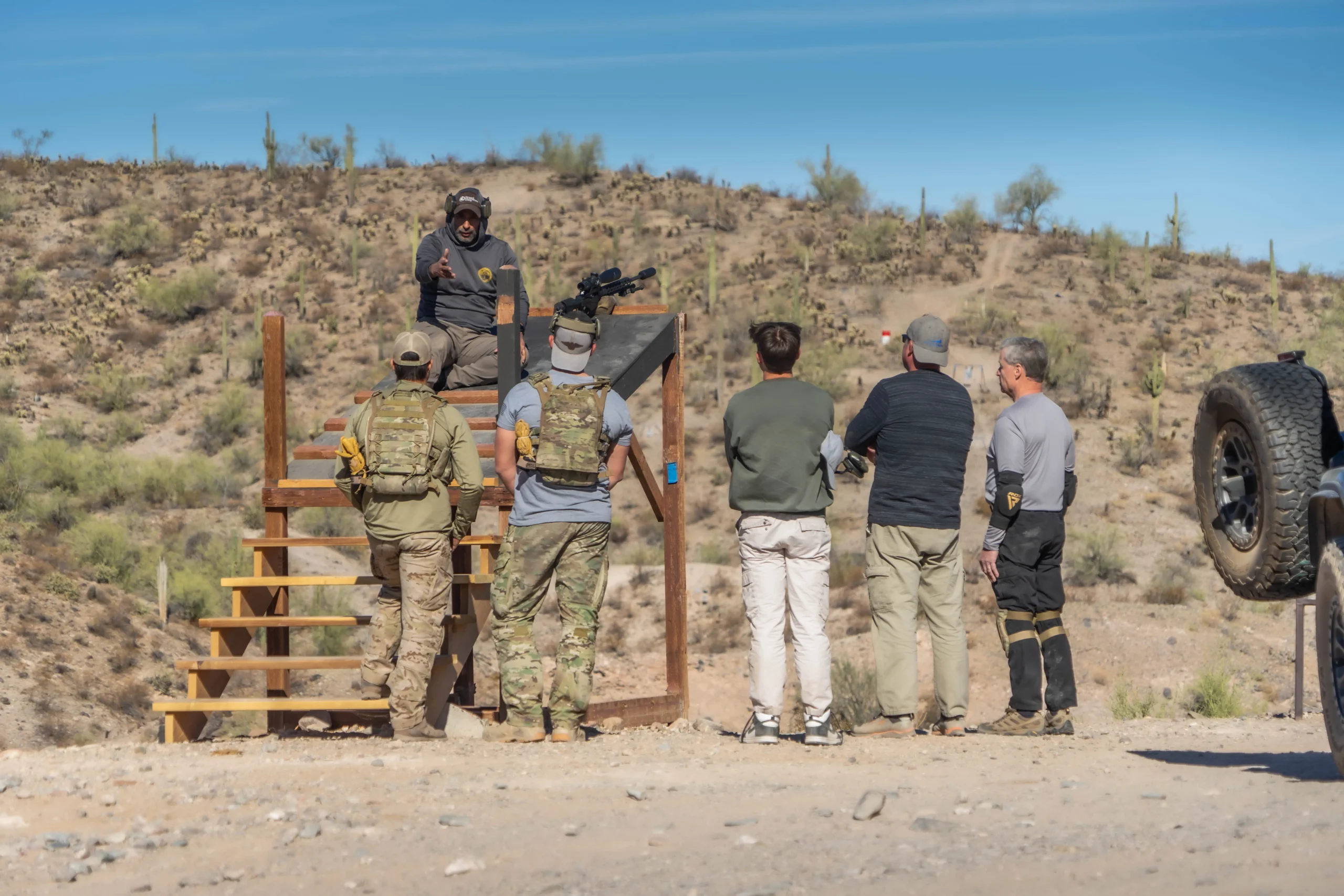
Cowtown Range sits firmly on the serious side of that line. We skip indoor booth restrictions and slide-deck lectures to deliver hands-on instruction in open-air outdoor bays, with membership options for those who want to make Cowtown their home range.
But choosing the right course comes down to matching your platform, skill level, and operational goals with the specific curriculum that builds your capability downrange.
Cowtown Range Course Selection Guide
Use this decision framework to audit your current skill set, match your platform, and lock in the exact Cowtown course built to elevate your capability downrange:
Overview of Training Tracks
-
Handgun & EDC Training: From unboxing your first striker-fired system to drawing under stress, our pistol curriculum moves you systematically through fundamental mechanics, red-dot optics zeroing, and dynamic movement around barriers.
-
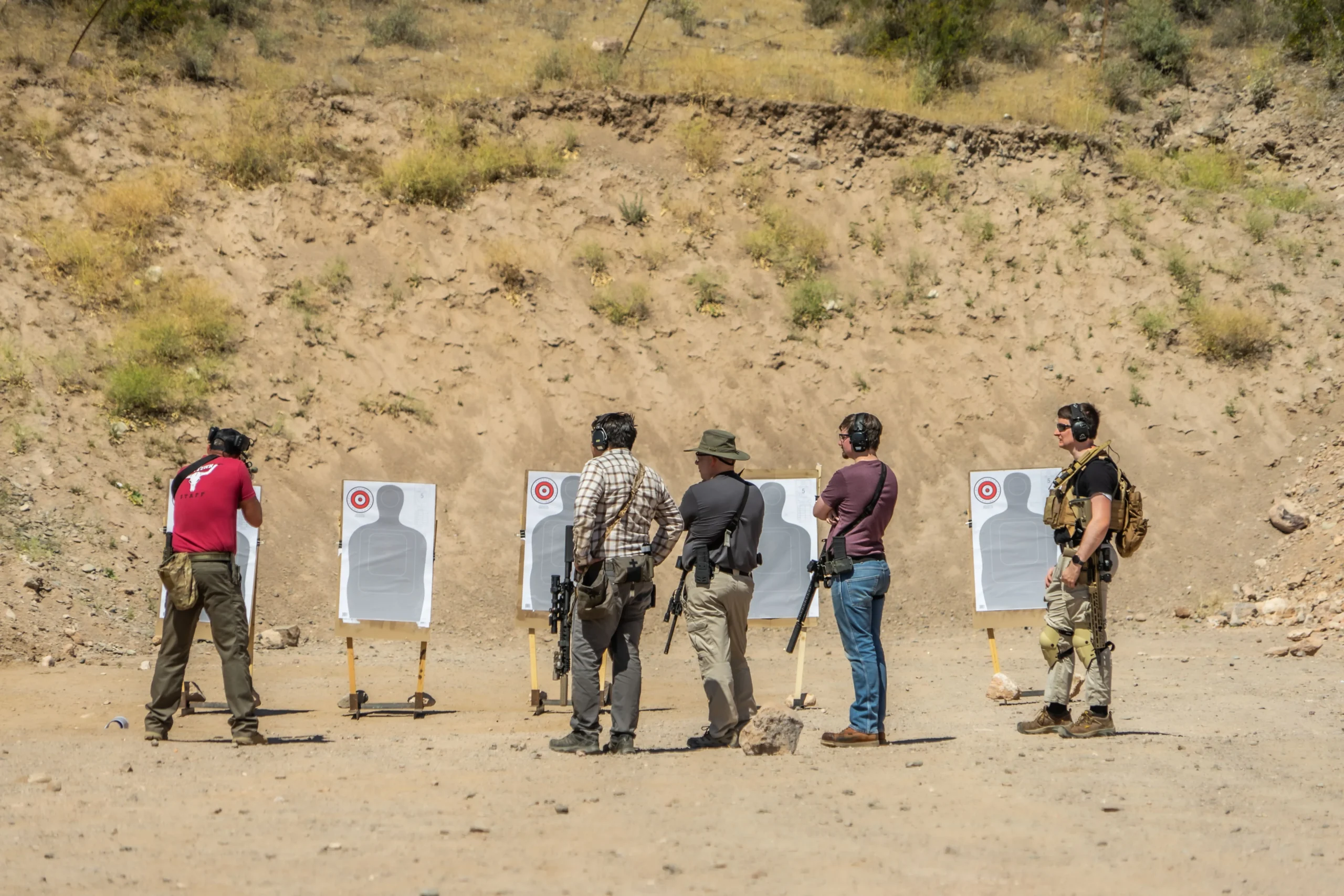
Rifle & Carbine Training: Master your primary defensive system. Learn zeroing, workspace manipulations, weapon-light activation, positional shooting, and engaging targets out to 700 yards with LPVOs.
-
Precision Rifle Series (PR1–PR3): Stretching lead across our high-desert terrain requires mastering ballistics. Build accurate DOPE, read full-value winds, and engage targets out to 1,000+ yards from tripods and barricades.
-
Custom Private Firearms Training: Tailored instruction for individuals or small groups looking to elevate performance. Work 1-on-1 with elite instructors to fix specific mechanical flaws, zero niche platforms, or run specialized drills ($175/hr, 4-hr minimum). Email
kfreeland@cowtownrange.comto schedule.
How to Audit Your Choice: The Shooter’s Pre-Registration Checklist
Don’t waste time or ammo on the wrong class. Match the training to your baseline and equipment before you book. Run this quick check first:
Match the Platform to the Syllabus
Are you bringing a striker-fired EDC handgun, a red-dot setup, an AR carbine, or a precision bolt-action rifle? Ensure you aren’t booking a general fundamentals class if your goal is optic-specific mechanics like Fundamentals of Red Dot Pistol or Intro to Scoped Carbine.
Verify True Prerequisites
Don’t skip steps. Intermediate and advanced courses like Handgun 2/3, Carbine 2/3, or PR2/PR3 require foundational prerequisites or verified Military/Law Enforcement experience. If you haven’t mastered workspace mechanics, start at Level 1.
Audit Your Holster & Gear Rig
If you are taking an EDC or defensive handgun course, confirm your holster setup. Quality Outside-the-Waistband (OWB) or Inside-the-Waistband (IWB) holsters built for your specific platform are required; serpa-style or floppy nylon holsters won’t fly on an active bay.
Calculate Your Round Count
Check the specific course requirements before buying ammo. Introductory classes typically require 200–300 rounds, while high-volume courses like Handgun 3 or Performance Handgun require 400 to 1,000+ rounds of factory ball ammunition.
Determine Your Coaching Needs
Ask yourself if you need the structure of a small group environment or the dedicated focus of Custom Private Training. If you need to zero a niche rifle setup, fix a specific mechanical flaw, or train with a private group of friends, 1-on-1 private coaching is the more efficient route. Reach out directly to kfreeland@cowtownrange.com to schedule custom dates.
Train Where the Experience Matters
Cowtown Range isn’t a corporate, retail stall in a strip mall. We provide the high-desert real estate, open-air bays, and elite cadre required to build true operational capability.
Stop punching paper in an indoor booth. Pick your course, explore historic high-desert training grounds, check out Cowtown Range membership options, and step onto the dirt to join a community of serious practitioners.
Frequently Asked Questions
What gear do I need to bring to a Cowtown course?
Every live-fire class requires ballistic eye protection, electronic ear protection, a rigid belt, high-collared shirt, closed-toe boots, water/electrolytes, your platform, and 200–400 rounds of factory ball ammo.
Can I take an advanced class if I have prior Military or Law Enforcement experience?
Yes. Equivalent MIL/LE experience satisfies prerequisites for intermediate and advanced courses across all tracks.
What happens after I complete a Cowtown training course?
Maintain your edge. Continue self-governed practice with a membership plan, book private firearms instruction, or test your mechanics in competitive shooting matches at Cowtown.