
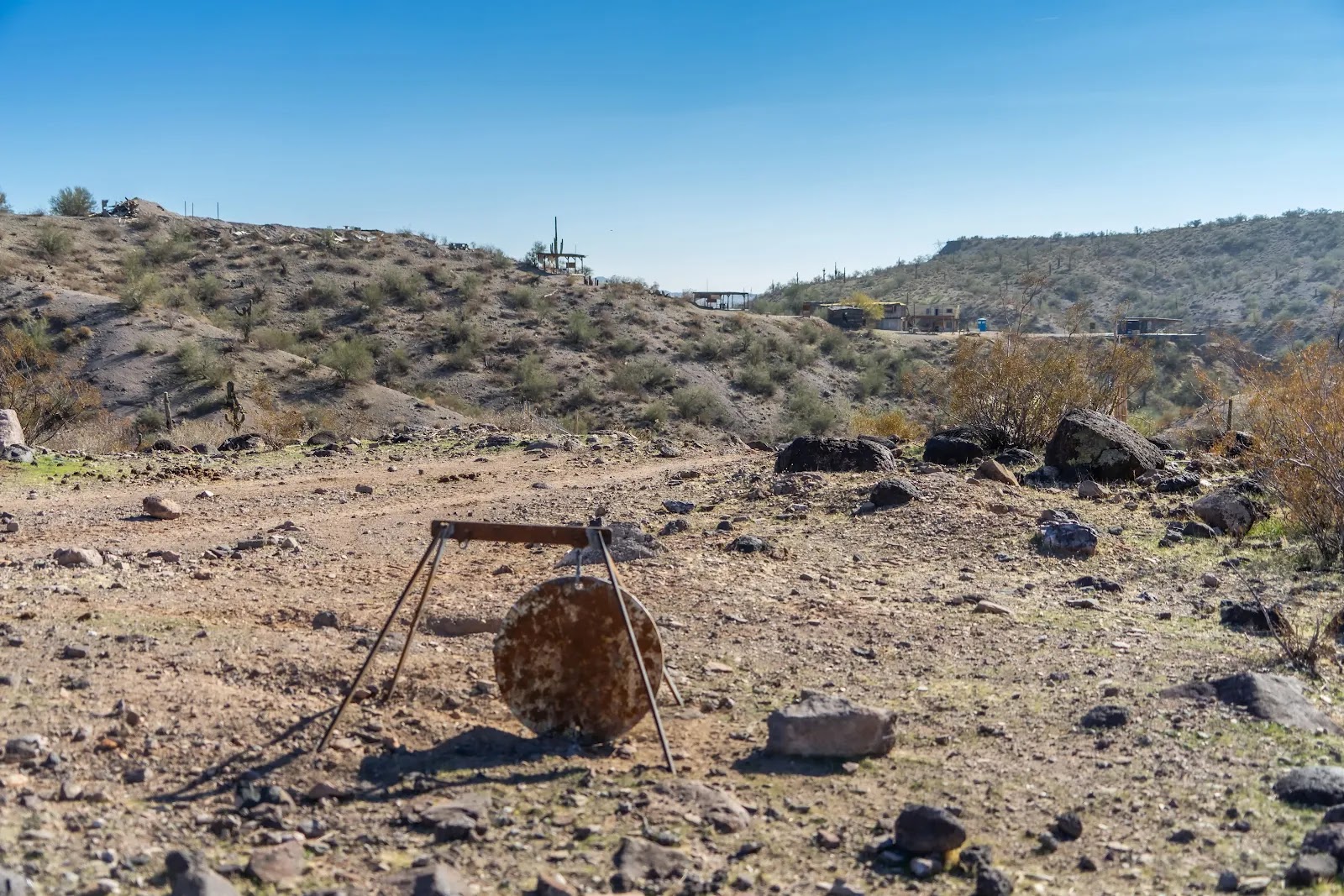
Pushing past 500 yards in the Sonoran Desert strips away all the theoretical fluff. Ground-level heat waves distort your target, canyon crosswinds swallow holds, and shifting canyon-swept air pushes round after round off target.
Out here, precision is a direct, cold-hard mathematical process. You calculate atmospheric density, confirm optic mechanical tracking, read the mirage, and make split-second adjustments under dynamic desert conditions. To consistently ring steel out at a thousand yards, you need structured, real-world instruction from long-range shooting training courses that translate ballistic science into direct hits downrange.
Precision Rifle Training Overview
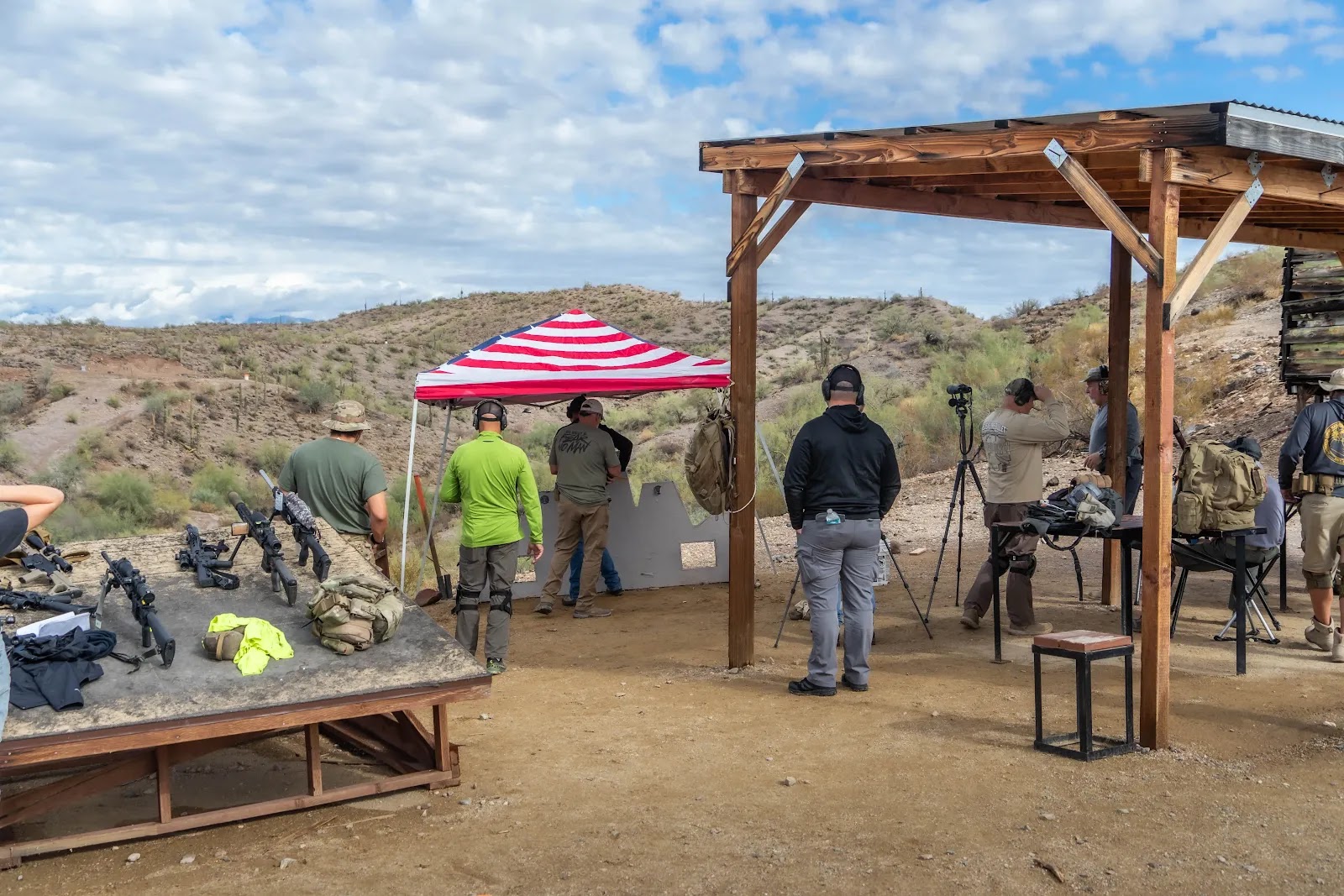
Our long-range precision training programs build true marksmanship capability beyond 500 yards through hands-on instruction in external ballistics, wind reading, optical tracking, and positional fundamentals. Practicing off our 1,000-yard high-desert platforms, you’ll learn to calculate density altitude, dial elevation adjustments, hold for crosswinds using MIL or MOA reticles, and manage trigger control to eliminate shot dispersion.
Mastering Environmental Variables
Putting lead on target at extended ranges requires converting real-time desert inputs into exact turret dials. Gravity stays constant, but air density, crosswinds, and thermal updrafts change by the hour.
Density Altitude (DA) & Aerodynamic Drag
Muzzle velocity gets your bullet out of the barrel, but ambient air pressure dictates how long it stays supersonic. Density Altitude combines temperature, pressure, and humidity into one core operational metric:
-
High DA (Thin Air): High heat and low barometric pressure mean less drag. Your round retains velocity longer, flattening trajectory and cutting down wind drift.
-
Low DA (Dense Air): Cold, thick air creates drag, slowing the projectile early and forcing steeper elevation holds.
Transonic Instability
As a bullet slows to around Mach 1.2 (~1,340 fps), it hits the transonic boundary. The shockwave shifts along the projectile’s profile, inducing dynamic instability. If your load lacks a high ballistic coefficient (BC), it will tumble and stray before reaching the 1,000-yard mark.
Wind Reading and Mirage
Wind across a high-desert canyon is never uniform. A steady 10 mph breeze at your platform might drop in a draw, then swirl as a thermal updraft at the steel.
You read the mirage—the visual light refraction caused by heat waves—to judge speed downrange:
-
Boiling Mirage: Heat waves rise vertically. Signals zero effective crosswind, but thermal expansion can push shots high.
-
Diagonal Drift: Heat waves tilt roughly 45 degrees, indicating a light-to-moderate crosswind.
-
Horizontal Run: Heat shimmer washes completely flat along the horizon. Expect heavy crosswind drift; keep your eyes on desert terrain cues like moving brush or blowing dust.
Precision Rifle Course Curriculum
Our course progression takes you straight off the static bench and onto dynamic terrain, building confidence through structured, real-world instruction.
Precision Rifle 1 (PR1) – Intro to Precision Rifle
A two-day foundational course introducing the core essentials of extended-range engagements. You’ll cover precision rifle setup, proper optic mounting, establishing a baseline zero, validating bullet velocity, and mastering shooter-observer comms. PR1 delivers the ballistics foundation and physical mechanics required to engage targets at distance.
-
Prerequisites: None (Open Enrollment).
Precision Rifle 2 (PR2) – Intermediate Precision Rifle
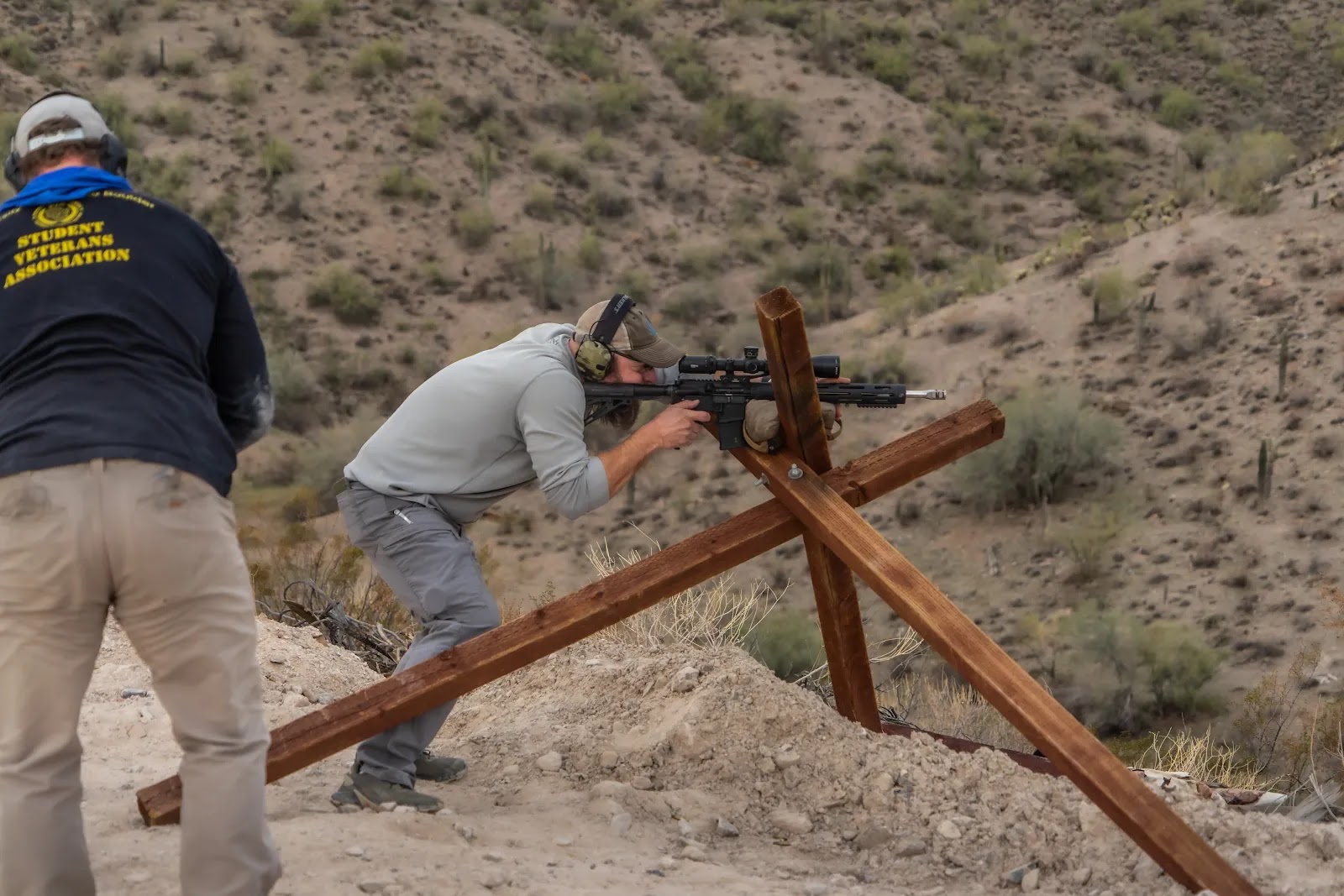
This two-day intermediate course pushes your marksmanship capability into dynamic territory. Dive deep into advanced ballistics, dynamic wind holds, and situational shooting. Learn to manage time constraints, build stable shooting positions off barricades, and engage multi-target arrays across varying ranges.
-
Prerequisite: Precision Rifle 1 (PR1).
Precision Rifle 3 (PR3) – Advanced Precision Rifle
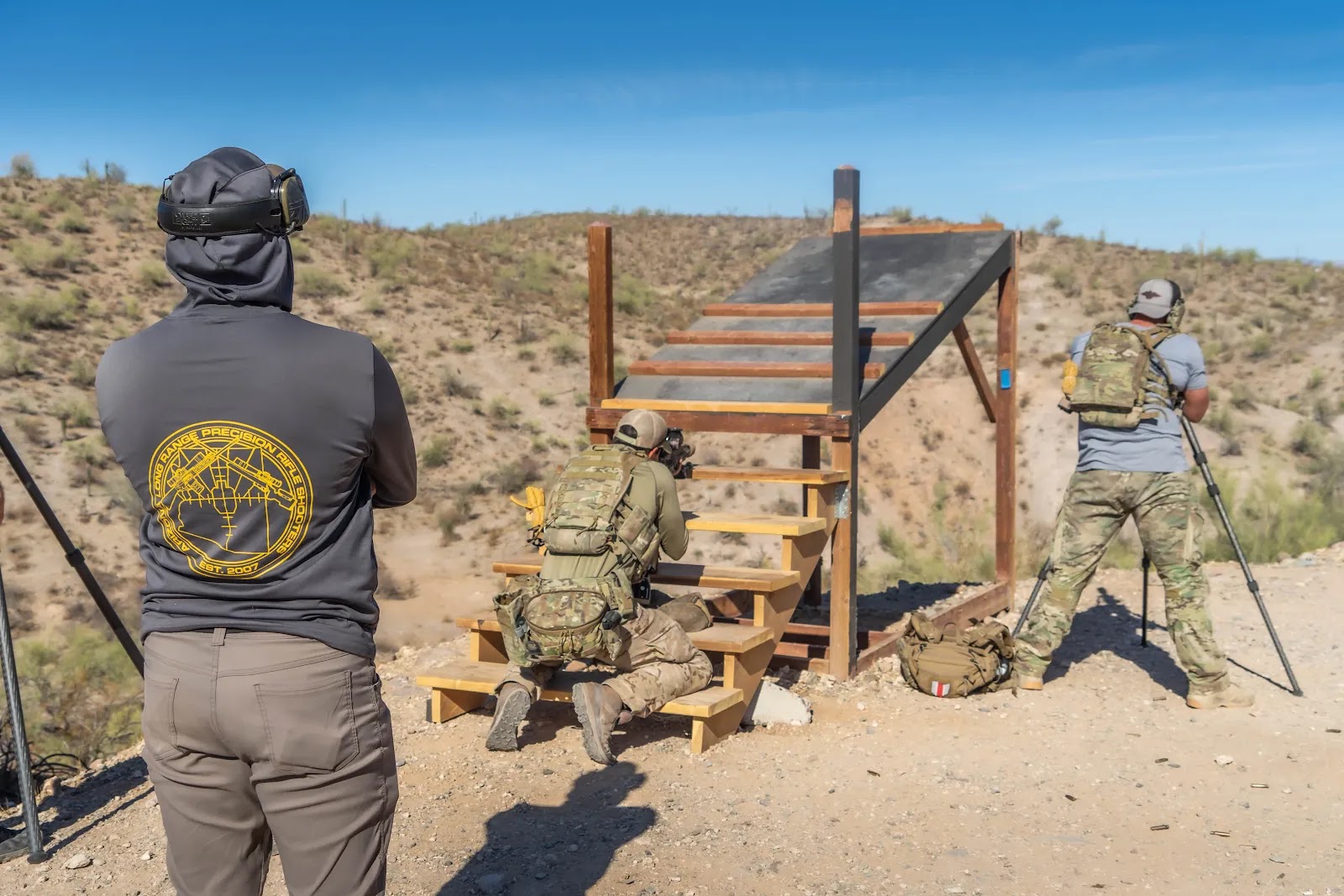
A two-day advanced course focused on rapid target acquisition, field craft, and high-angle platforms. Apply specialized techniques for unknown distance (UKD) targets, unconventional positional holds, dynamic tripod setups, and high-stress team communication drills.
-
Prerequisites: Precision Rifle 1 & 2, or equivalent LE/MIL operational experience.
Intro to Precision Rifle Matches (PMI)
A one-day course designed to prepare you for competitive Precision Rifle Series (PRS) events. Master stage management, match scoring, equipment selection, and stage commands while practicing dynamic movements. PMI runs right alongside live match environments so you receive active coaching on the line.
-
Prerequisite: Precision Rifle 1 (PR1).
Intro to Accurized AR Matches (AAMI)
A one-day course focused on pushing semi-automatic AR platforms out to extended distances. Learn gas-gun management, match rules, division requirements, and positional support strategies. Runs concurrently with active matches for immediate, real-world execution.
-
Prerequisite: Precision Rifle 1 (PR1).
Required Equipment Checklist
No need to bring custom handloads, but your platform setup must meet basic baseline standards so you can focus on training.
-
Rifle System: Minimum caliber 5.56/.223 up to .300 Win Mag capable of maintaining 1 MOA accuracy.
-
Optic: Variable magnification scope (3.5x–10x minimum range) with exposed tactical turrets.
-
Ammunition: 100 rounds per day of match-grade ammo (308 Win minimum 168 gr / 175 gr recommended; 6.5 Creedmoor minimum 140 gr). 200 rounds required for Accurized AR matches.
-
Support Gear: Sturdy adjustable bipod, filled rear shooting bag, optic adjustment tools, and a dedicated shot notebook/DOPE book.
-
Personal Items: Eye and ear protection, weather-appropriate clothing, solid boots, and personal hydration. Optional: shooting mat, spotting scope, laser rangefinder, tripod, or Kestrel meter.
Train Where the Pros Trained
Born as a Hollywood Western set in 1973 and forged in the fires of the Global War on Terror as a Special Ops training ground, Cowtown Range gives you authentic, rugged real estate to master your craft. Tucked into the Peoria mountains, our high-desert platforms offer true canyon winds, steep elevation angles, and clear sightlines out past 1,000 yards.
We don’t micromanage you with sterile lane dividers or arbitrary, restrictive range safety rules. We treat you like an adult so you can train like a professional—offering the freedom to run movement drills, practice positional work off barricades, and self-govern on active lines. Whether you’re taking an open training course, running weekly drills with a Bronze Membership access pass, stepping up to a Silver Membership option, or leveraging Gold Membership benefits for top-tier perks and scheduling freedom, Cowtown provides the ultimate sanctuary to build real capability.
Get Off the Bench and Into the Dirt
Theoretical DOPE cards only get you so far. Skill is built by getting out on the platform, reading the desert air, tracking your brass, and putting rounds downrange. Check our upcoming course dates, pack your kit, and come test your edge in the Sonoran desert.
Frequently Asked Questions
What scope setup works best for these courses?
A First Focal Plane (FFP) optic with exposed turrets and a matching reticle (MIL/MIL or MOA/MOA) is the gold standard. FFP reticles scale with zoom, making rapid wind holds accurate at any magnification.
Do I need custom handloaded ammunition?
No. In fact, for safety and consistency on active training lines, we require quality factory match-grade ammunition (such as 168gr/175gr for .308 or 140gr for 6.5 Creedmoor). Modern factory match loads deliver the exact velocity consistency needed to reliably impact steel at 1,000 yards.
Which caliber should I bring for my first class?
6.5 Creedmoor and .308 Winchester are standard choices. 6.5 Creedmoor offers light recoil with flat trajectories, while .308 Winchester forces disciplined wind reading. Standard AR platforms in 5.56/.223 are ideal for our Accurized AR match classes.
Can I access the 1,000-yard platforms without taking a class?
Public shooters can sign up for open training courses and competitive matches at any time. Direct access to our high-desert long-range platforms outside of scheduled events is available through our range memberships.