

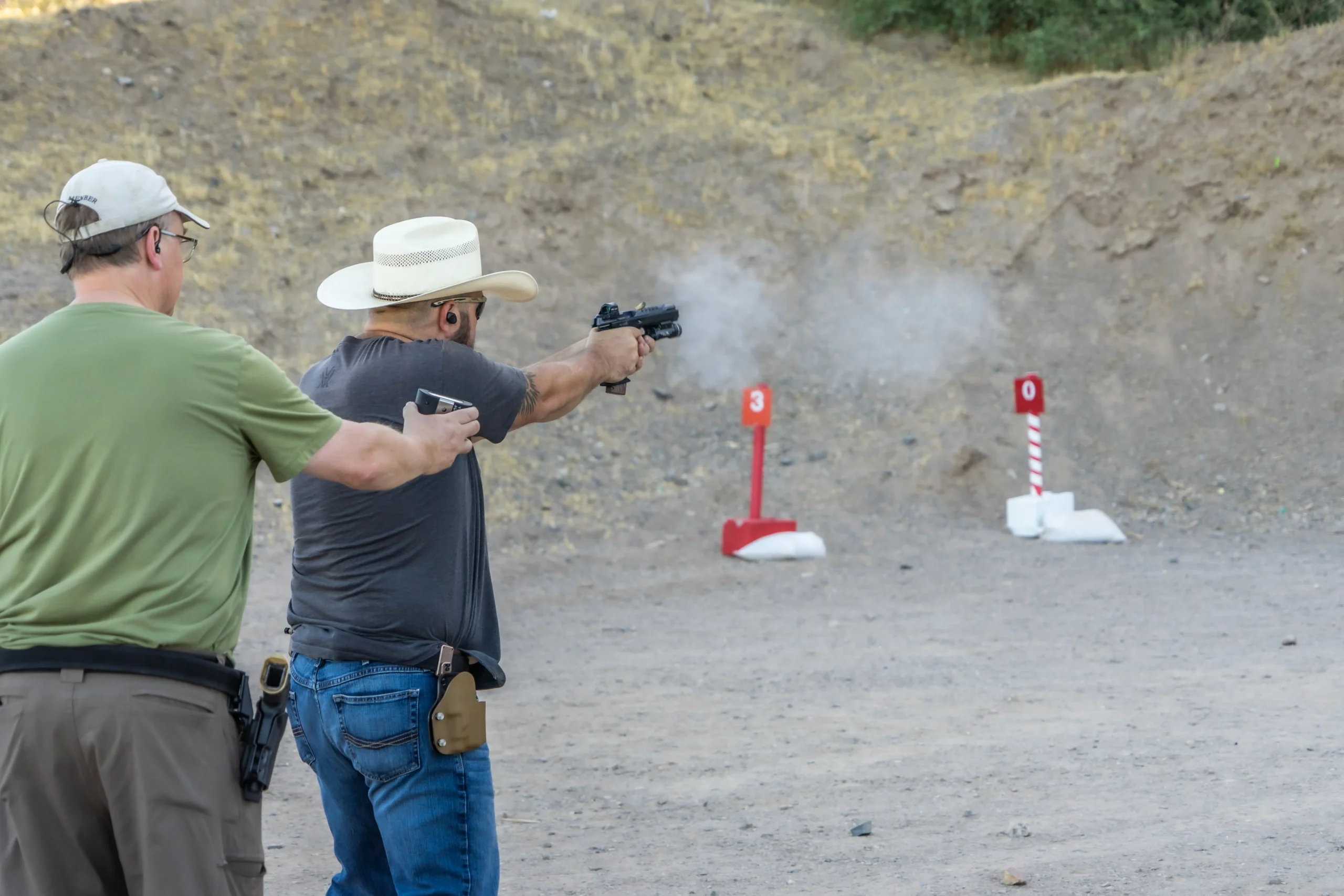
A standard indoor range with rigid stalls, fixed distances, and an overzealous safety officer breathing down your neck isn’t where real proficiency is built. Standing in a concrete booth, taking one slow shot every three seconds at a static sheet of paper, leaves critical gap areas in dynamic marksmanship. Real mastery of a pistol requires room to work, solid mechanics, and an environment that treats you like a responsible adult.
Whether you just unboxed your first semi-automatic pistol or you are looking to strip away bad habits built over years of unstructured range trips, enrolling in professional handgun training courses gives you the mechanical foundation required to run your platform with total confidence.
What Is a Basic Handgun Training Course?
A basic handgun training course is a structured, instructor-led program designed to build fundamental marksmanship, safe firearm handling, and gun-manipulation skills. It covers the core mechanics—grip, stance, sight alignment, and trigger control—along with drawing from a holster, clearing malfunctions, and reloading smoothly under real-world conditions.
Beyond the Static Lane: Why Real Fundamentals Demand Real Space
Most shooters start their journey confined to a narrow indoor lane. You pay for an hour, hang a target, send it down a track, and stand entirely still. While that environment introduces you to recoil, it completely fails to prepare you for actual practical shooting.
To truly own your mechanics, you need to step off the static line and get out into the elements. At Cowtown Range, our historic high-desert training grounds in Peoria, AZ have served everyone from Hollywood stuntmen to elite Special Forces units. That same high-desert real estate is available to serious practitioners who want to build skills without being micromanaged. Across our spacious outdoor bays and long-range platforms, we trade restrictive lane dividers for actual practical terrain where you can move, work from a holster, and run your gear the way it was designed to be run.
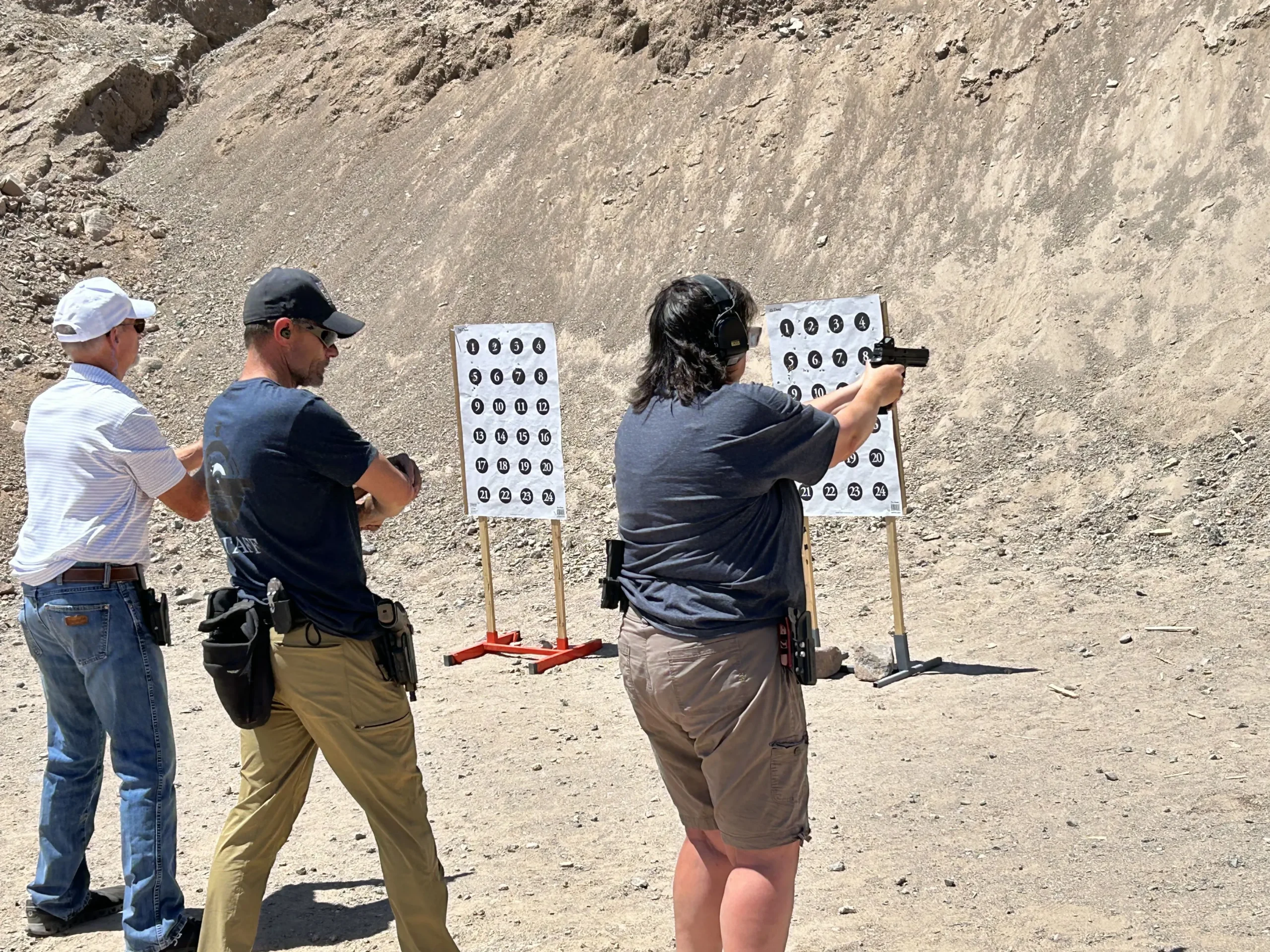
The Four Non-Negotiable Fundamentals of Pistol Marksmanship
Every missed shot on target traces back to a breakdown in one of four core mechanical pillars. Master these four elements, and accurate shot placement becomes second nature regardless of distance, speed, or weather conditions.
1. The Friction-Driven Grip
Grip is your direct interface with the firearm. A weak or improper hold allows the pistol to jump around in your hands during recoil, forcing you to constantly re-establish your sight picture between shots.
-
High-tang grip placement with the web of your dominant hand wedged tight under the beavertail.
-
360-degree contact clamping the frame using your support hand to fill all empty grip panels.
-
Wrist lockout to absorb energy directly into your forearms rather than letting the muzzle flip.
2. A Recoil-Absorbing Stance
Your stance provides the structural foundation for your grip. Standing upright with locked knees or leaning backward puts you off-balance the moment the slide cycles back.
-
Athletic, nose-over-toes posture with feet placed shoulder-width apart.
-
Weight distributed aggressively on the balls of your feet.
-
Natural alignment toward the target area to minimize muscular tension.
3. Sight Picture and Alignment
Whether running traditional iron sights or a modern red dot, clean sight alignment ensures the barrel points exactly where you intend.
-
Equal height, equal light across the front and rear notch for iron sights.
-
Immediate visual focus on the target when running a pistol red dot, letting the reticle float over the point of aim naturally.
4. Isolated Trigger Control
Pressing the trigger seems straightforward, but it remains the primary source of missed shots for novice and experienced shooters alike.
-
Straight-back pressure using the pad of your index finger without twisting the frame.
-
Smooth take-up of slack followed by a clean break.
-
Controlled reset under recoil rather than slapping or completely letting go of the trigger blade.
What to Expect in Handgun 1: Basic Handgun
When you join a Cowtown Range membership or sign up for an open course, you won’t sit in a classroom for hours listening to lecture slides. Our Handgun 1 – Basic Handgun course is an intensive, 5-hour hands-on training module built to establish marksmanship fundamentals, clean weapon manipulation, and total self-governance on the range.
You won’t be yelled at by an angry RSO over trivial nonsense. Our certified instructors operate like mentors, coaching you through friction points, refining your mechanical efficiency, and holding you accountable for every round sent downrange.
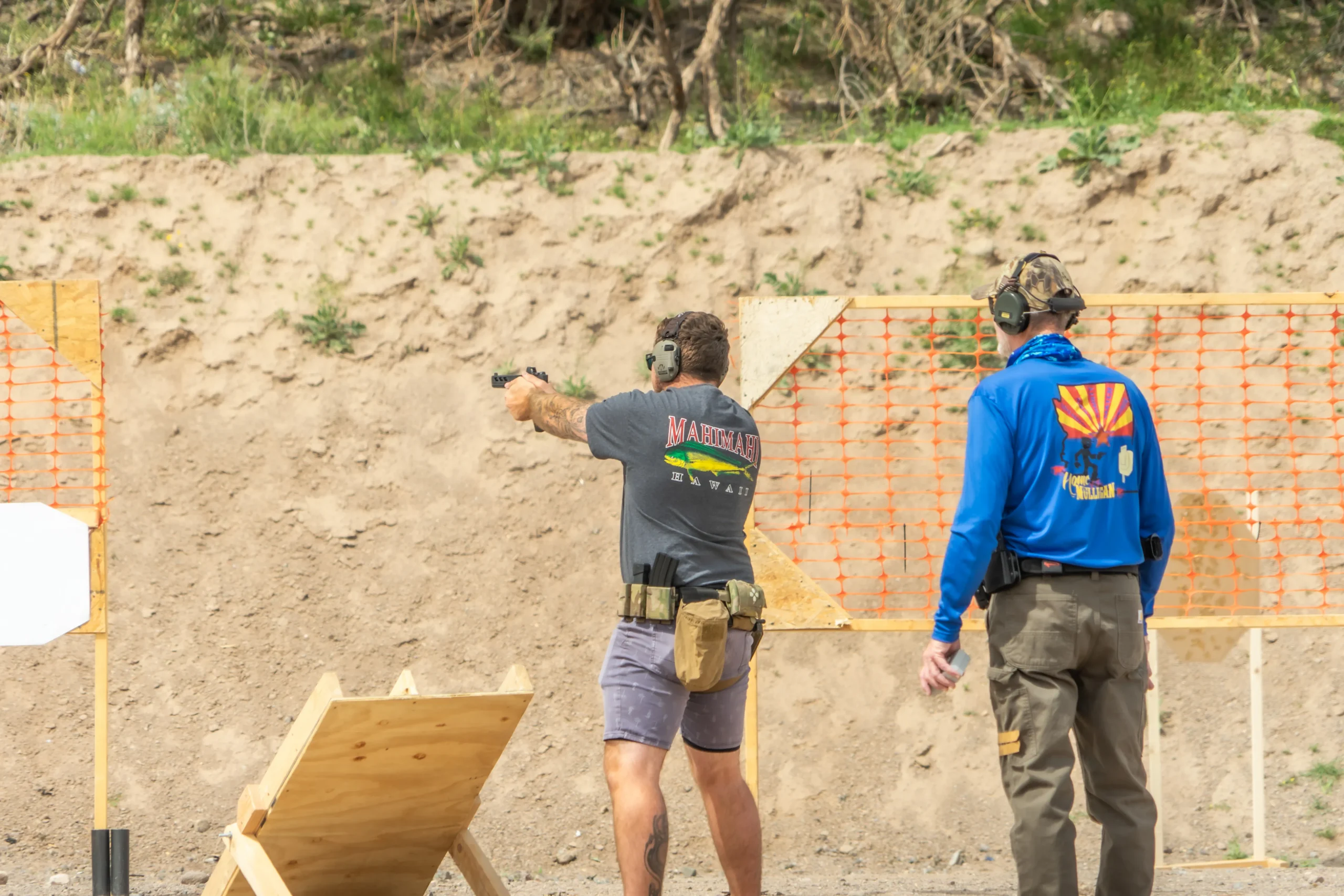
Common Beginner Traps (And How to Fix Them)
-
Flinching or Anticipating Recoil: Expecting the bang causes shooters to push the muzzle downward right as the shot breaks, resulting in low-left impacts for right-handed shooters. The Fix: Dry-fire practice and wall drills to train your brain to accept the recoil without pushing back.
-
Heeling the Pistol: Pushing the palm of the hand forward right as the trigger breaks to combat recoil, sending rounds high off-target. The Fix: Maintain consistent, 70/30 support-hand pressure throughout the entire trigger press.
-
Rushing Speed Over Efficiency: Trying to draw and fire fast before establishing clean biomechanics. The Fix: Slow down the draw stroke into distinct phases. Speed is simply smooth mechanics executed rapidly without wasted movement.
Gear Checklist: Preparing for Your First Outdoor Session
Showing up unprepared wastes valuable range time. Running a full day in the Arizona high desert requires functional gear that holds up under heat, dirt, and repetitive drills.
Next Steps: Building a Continuous Training Habit
Taking a single introductory course is a start, but marksmanship is a perishable skill set. If you leave your handgun in a safe for six months after class, those hard-earned mechanical neural pathways degrade.
Once you clear Handgun 1, transition straight into dynamic training modules. Progress into Handgun 2 – Dynamic Shooting to learn movement, target transitions, and positional shooting. Move into Fundamentals of Red Dot Pistol to optimize your EDC platform. Supplement your formal coursework by shooting local steel matches or renting private bays with your training partners to keep your edge sharp week after week.
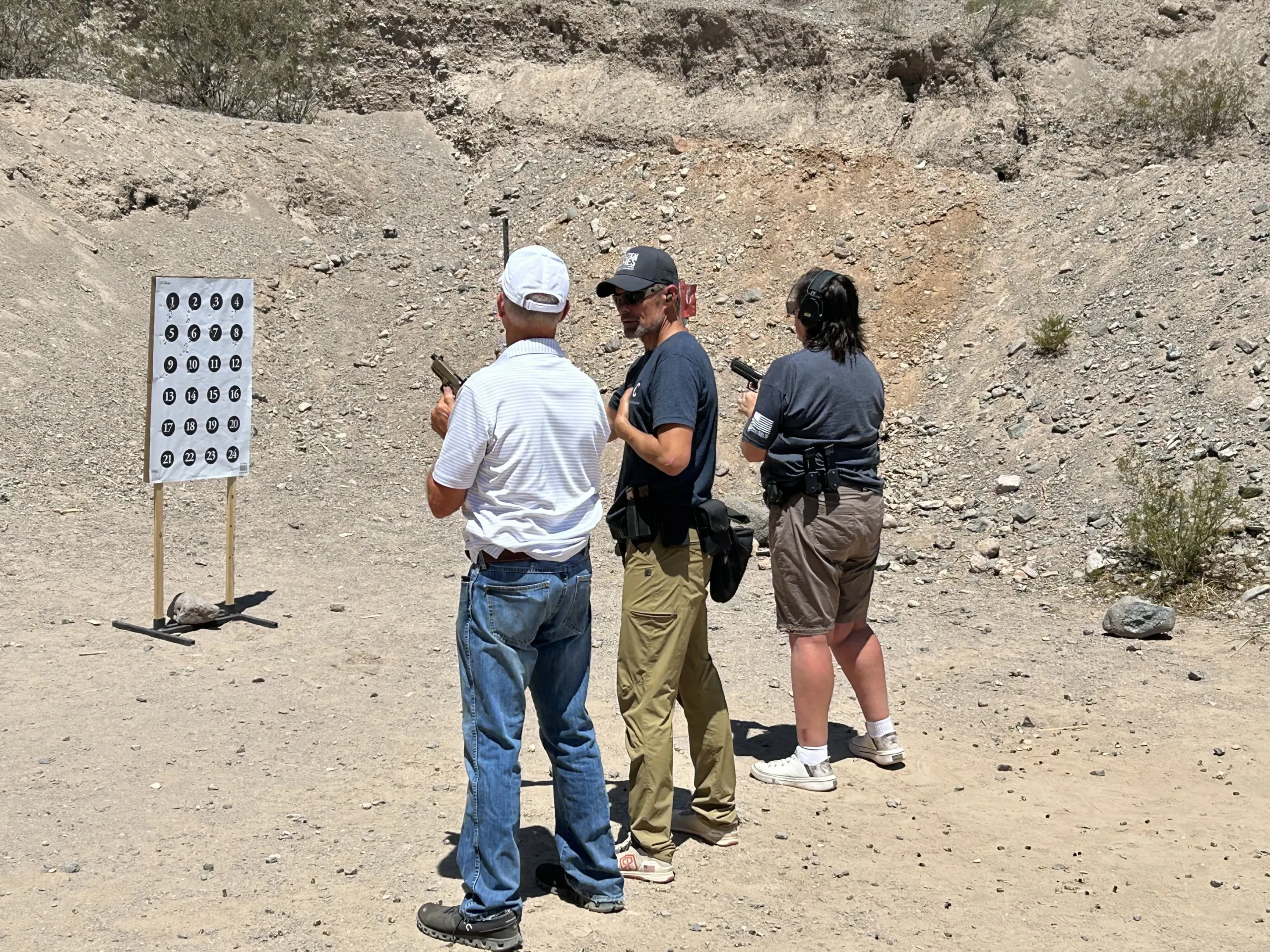
Step Off the Static Line: Earn Your Confidence on the Dirt
You can spend years standing in a cramped indoor booth turning money into noise, or you can step out onto the high-desert dirt and build the mechanical mastery required to run your platform like a true professional.
At Cowtown Range, we don’t treat you like a novice who needs a babysitter. We provide the real estate, the elite instruction, and the latitude for serious shooters to self-govern, push their limits, and earn true confidence on the line.
Ready to strip away bad habits and forge unbreakable fundamental skills? Explore our upcoming Handgun Training Courses or secure your Cowtown Range membership today. The desert is waiting. Bring your gear, and come send some lead downrange.
Frequently Asked Questions
Do I need my own firearm to attend a basic handgun course?
Yes, students are required to bring a reliable semi-automatic handgun along with an outside-the-waistband (OWB) holster, magazine pouches, and at least 2–3 magazines. Bringing your own equipment ensures you build muscle memory on the exact platform you intend to carry or keep at home.
What is the difference between Handgun 1 and a CCW class?
Handgun 1 focuses strictly on raw marksmanship biomechanics, gun handling, draw stroke efficiency, and clearing malfunctions from an open holster setup. A CCW course focuses heavily on state firearm laws, legal use of force, and drawing directly from concealed, inside-the-waistband (IWB) carry configurations. We strongly recommend taking Handgun 1 before taking a CCW class.
Are basic handgun courses suitable for absolute beginners?
Absolutely. Handgun 1 has no prerequisites and is designed specifically to teach safe firearm handling and foundational shooting skills without ego, pressure, or micromanagement.