
The Frontier Standard: How to Safely Draw and Holster During Cowboy Action Shooting Matches
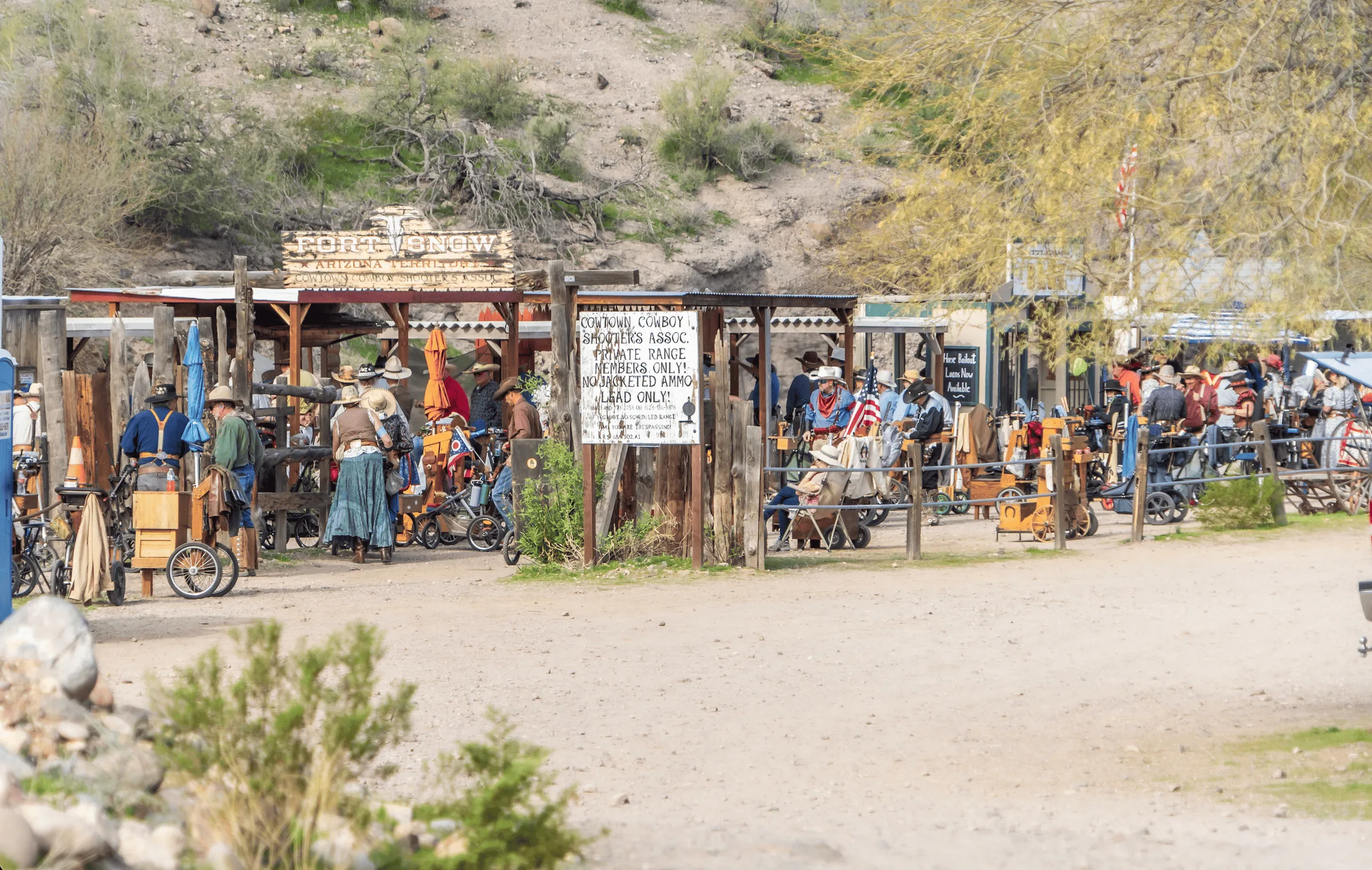
There is a distinct feeling when you step onto the high-desert dirt of Peoria, Arizona. Surrounded by 78 acres of rugged terrain, you are walking on a living legacy.
Originally born as a Hollywood Western movie set in 1973, Cowtown Range has hosted everything from legendary cowboy stuntmen to modern tactical instructors. Today, our expansive outdoor bays provide the ultimate arena where the spirit of the Old West comes alive during every match.
But whether you are running a historical replica or a modern platform, the absolute foundation of your training remains the same: safety is the bedrock of the freedom to train. For shooters preparing to compete, mastering how to safely draw and holster during cowboy matches is the first step toward runnin’ and gunnin’ with the best.
To experience this heritage firsthand, explore our dedicated SASS Cowboy Action Shooting division at Cowtown Range.
Safety Is Not a Quick-Draw Contest
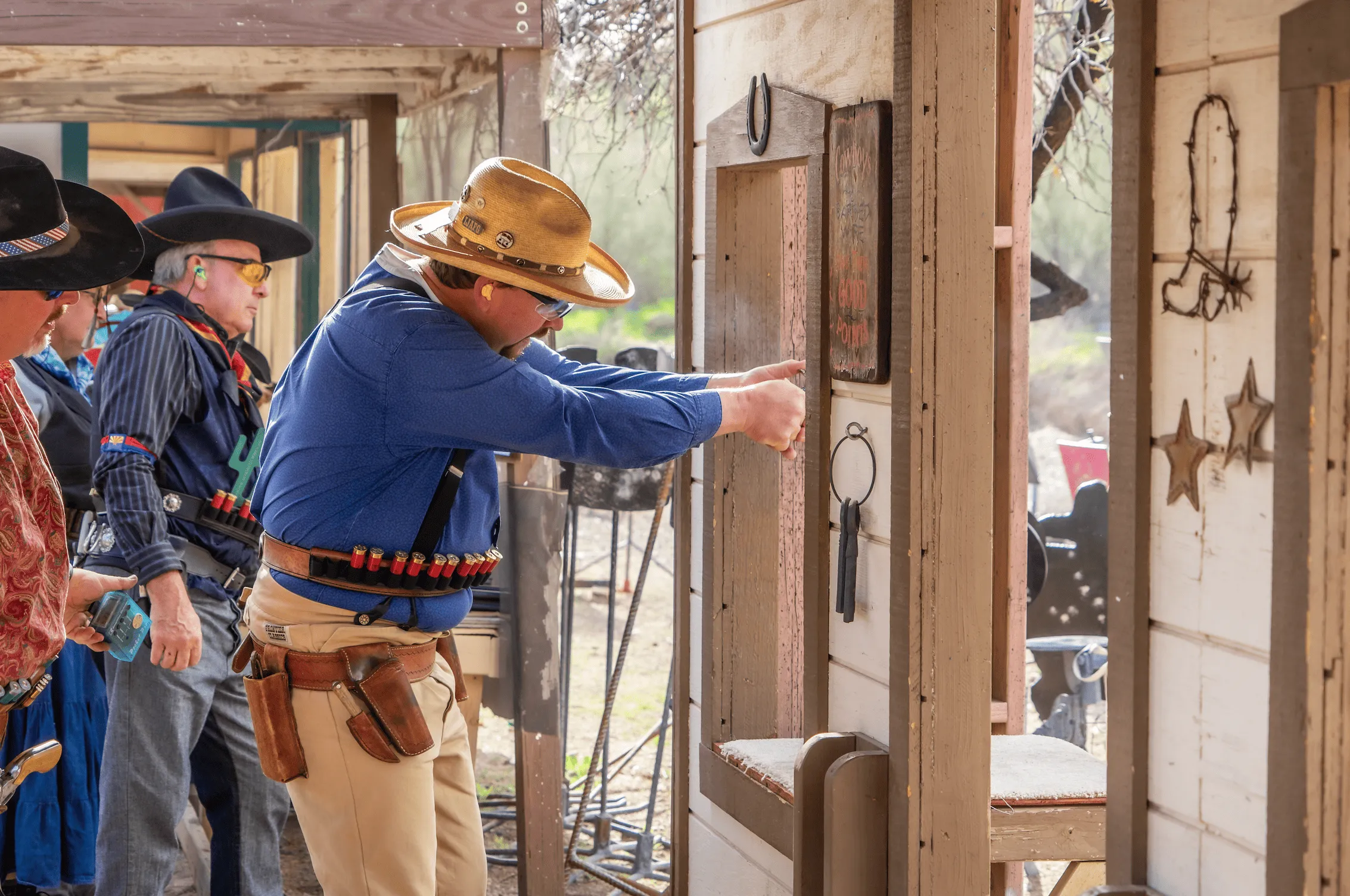
Cowboy action shooting is a test of deliberate skill, not a movie quick-draw stunt. While the timer is running and speed certainly matters, controlled, purposeful movement always takes priority over raw velocity. Rushing your draw without solid, foundational mechanics is the fastest path to a match disqualification or a negligent discharge.
At Cowtown, we treat you like adults so you can train like professionals. Our safety protocols are designed to give you the autonomy to push your limits safely. To keep your stage clean and your matches safe, always internalize these core rules of the line:
- Treat every firearm as loaded at all times, across every stage.
- Revolvers may not be cocked until the muzzle is 45° downrange.
- Your muzzle must not point beyond 170° from shooting position.
Prerequisites: What You Need Before Stepping onto the Bay
Mastery begins long before you ever touch a platform on the firing line. Before you bring your system to a match, you must ensure your gear and preparation meet the standard.
Equipment Standards (1899 or Earlier Design)
Cowboy action shooting relies on period-correct firearms designed in 1899 or earlier (or modern replicas of them). This includes single-action revolvers, lever-action rifles, lever-action shotguns, and side-by-side or pump shotguns.
Your leather holster must be constructed of durable material, fit your specific revolver frame securely, and hold the platform at a natural hang point on your hip or torso. Ill-fitting holsters allow unwanted movement and increase the risk of accidental drops or trigger snags.
The Shooter’s Checklist
Before you line up on the clock at any of our matches, make sure you meet these essential prerequisites:
Step-by-Step: Executing a Safe Draw at the Line
When you are standing on the line and the buzzer sounds, adrenaline takes over, and your safety is in the hands of your ingrained habits. Keep your runs clean and your muzzle controlled by anchoring this exact draw sequence into your muscle memory.
1. Establish Your Foundation
Stand with a square, balanced stance, distributing your weight evenly over both feet. Your body should be relaxed, and your hands should be in the designated starting position (usually at your sides or on your hat, depending on the stage instructions).
2. The Draw Stroke (Clear Leather)
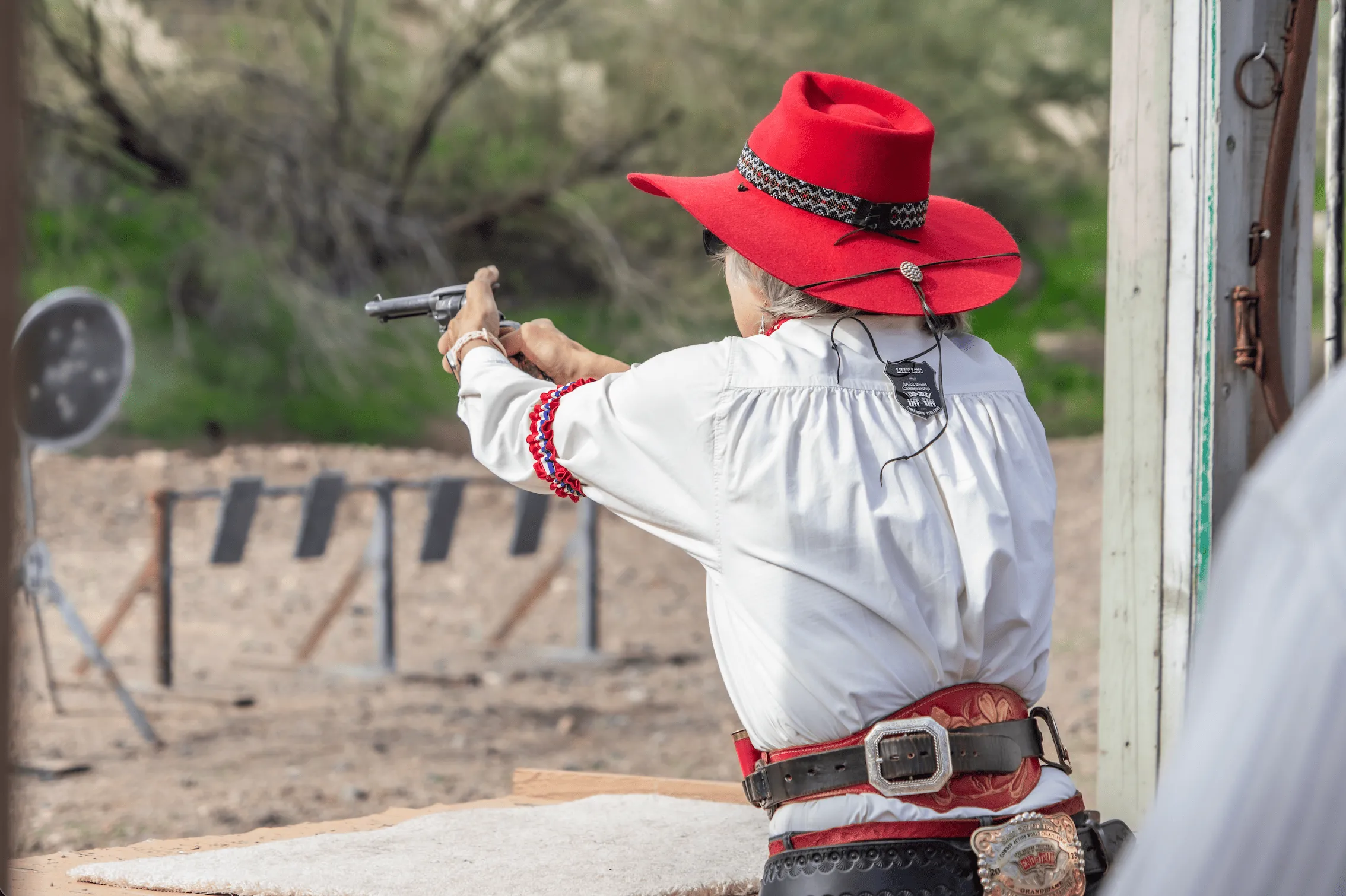
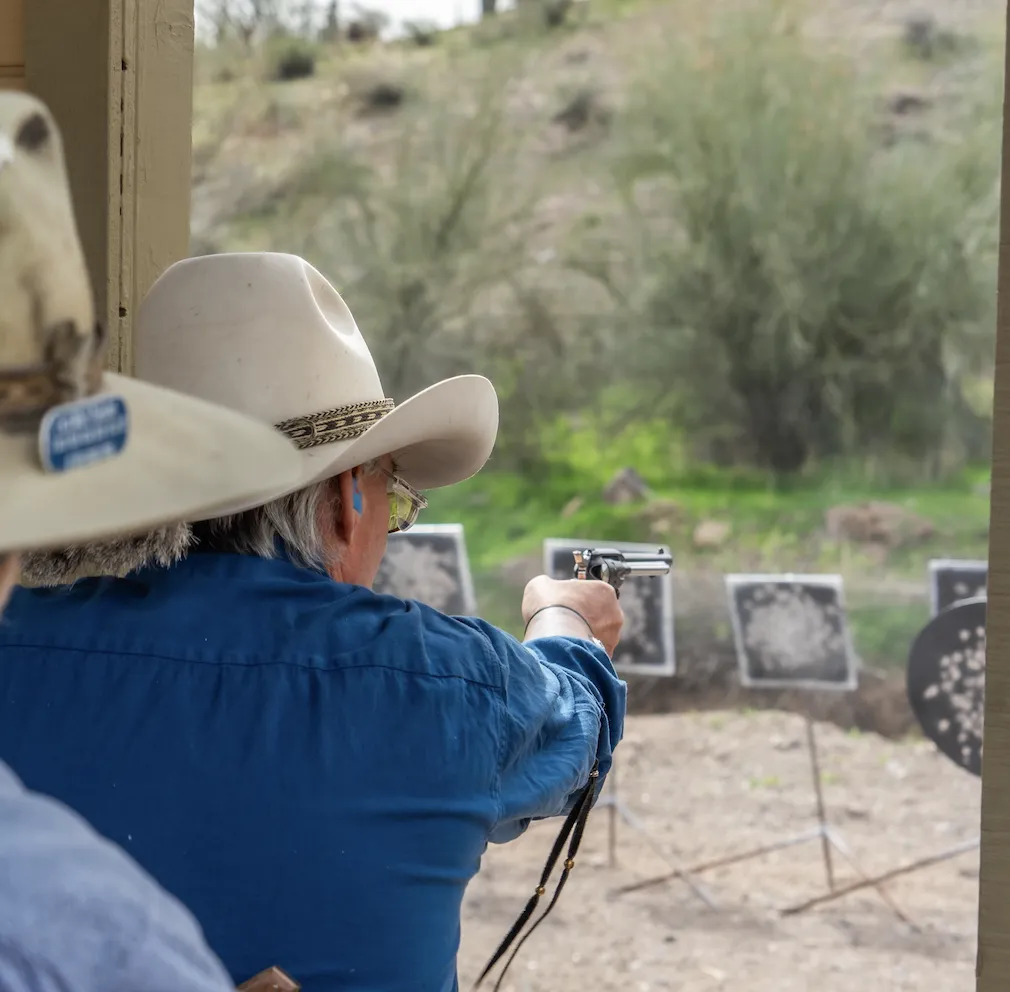
On the start signal, bring your strong hand down to establish a solid grip on the frame. Your thumb should rest on or near the hammer, but do not cock the hammer yet. Smoothly lift the revolver straight up.
3. Rotate and Present
As the muzzle clears the top of the holster, rotate the muzzle downrange. Once the platform is pointing safely away from your body and toward the targets, you may cock the hammer with your thumb.
Common Holstering Mistakes to Eliminate
To keep our community safe and maintain the high standard of safety we are known for, shooters must actively eliminate this common error:
- The “Pre-Cock” Trap: Cocking the hammer while the revolver is still deep in the holster or pointing at the ground.
Train Where the Pros Train
The desert doesn’t give participation trophies, and real-world proficiency is a perishable skill. The only way to master the draw and build instinctual, safe muscle memory is through consistent, structured practice under realistic conditions.
Whether you are looking to get started in cowboy action shooting, want to join our vibrant local matches, or want to secure your own key to our world-class outdoor facility, we have a place for you in our community.
- Join the Action: Check out our calendar of Matches and Events at Cowtown Range.
- Claim Your Autonomy: Discover the benefits of our community and learn How to Become a Cowtown Member.
- Discover Our Legacy: Read more About Cowtown Range’s history and our mission to provide the ultimate platform for the Second Amendment.
Frequently Asked Questions (FAQ)
Is cowboy action shooting a quick-draw sport?
No. Cowboy action shooting matches prioritize overall stage time, accuracy, and safe movement. Raw speed on the draw is secondary to smooth transition mechanics and hit probability.
Can I cock my hammer while the revolver is still in the holster?
Cocking the hammer may be done once the muzzle reaches 45° downrange. Doing so before the 45° mark is a Minor Safety Violation.
What should I do if I drop my platform during a stage?
If you lose control of your platform and it falls, do not attempt to catch it in mid-air. Let it fall. Alert the Range Officer immediately. Only the RO is authorized to safely retrieve a dropped firearm on a hot bay.