
The Modern Operator’s Guide: Best Practices for Carbine Handling
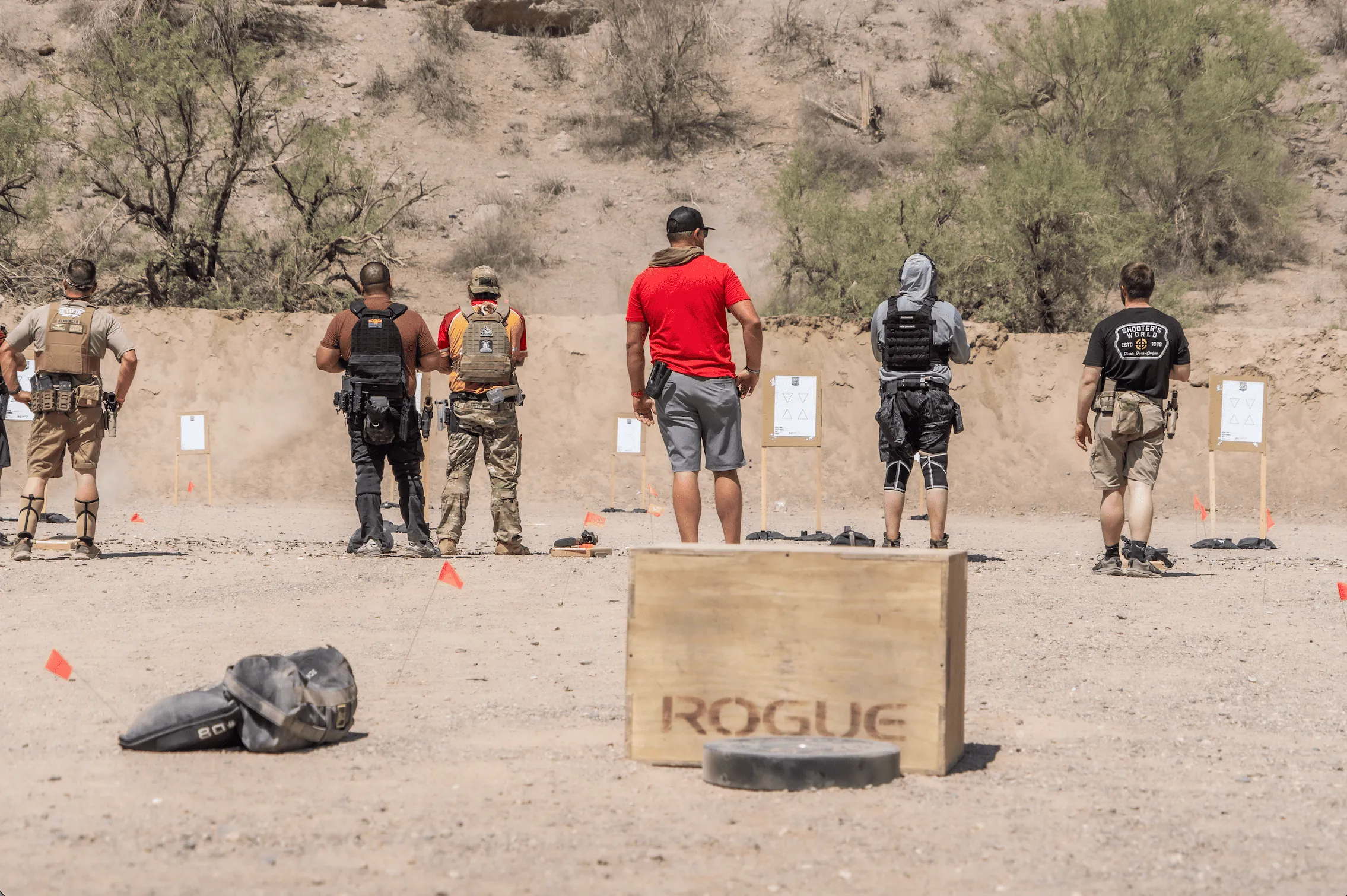
At Cowtown Range, we provide the liberty, space, and training real estate to master your craft. Our 78-acre, high-desert training facility in Peoria, AZ, is a far cry from your average, restrictive indoor shooting lane. It’s an authentic training ground designed for serious shooters who value autonomy, professional instruction, and the freedom to run real-world scenarios.
But the freedom to move and engage downrange is only as effective as the physical mechanics you bring to the bay. Whether you are running a lightweight AR-15 system or a highly customized defensive platform, mastering a carbine requires a seamless blend of uncompromising safety, perfect ergonomic setup, and deliberate physical execution.
Below, we break down the definitive best practices for carbine handling to ensure your dry-fire practice, range sessions, and tactical training stay sharp, safe, and effective.
To begin building your foundational skills or to refine your tactical movement, explore our structured, expert-led Rifle and Carbine Training Courses.
1. Ergonomic Blueprint: Perfecting Your Carbine Setup
The best practices for carbine handling begin long before you step onto the firing line. Optimizing your platform at the workbench ensures that your body doesn’t have to make awkward physical compensations under stress.
Demystifying Length of Pull (LOP)
Length of pull is the physical distance from the buttstock to the trigger face. A common misconception is that a shooter should determine LOP by placing the stock in the crook of their elbow and seeing if their index finger reaches the trigger. This outdated method ignores modern body armor, plate carriers, and dynamic shooting stances.
-
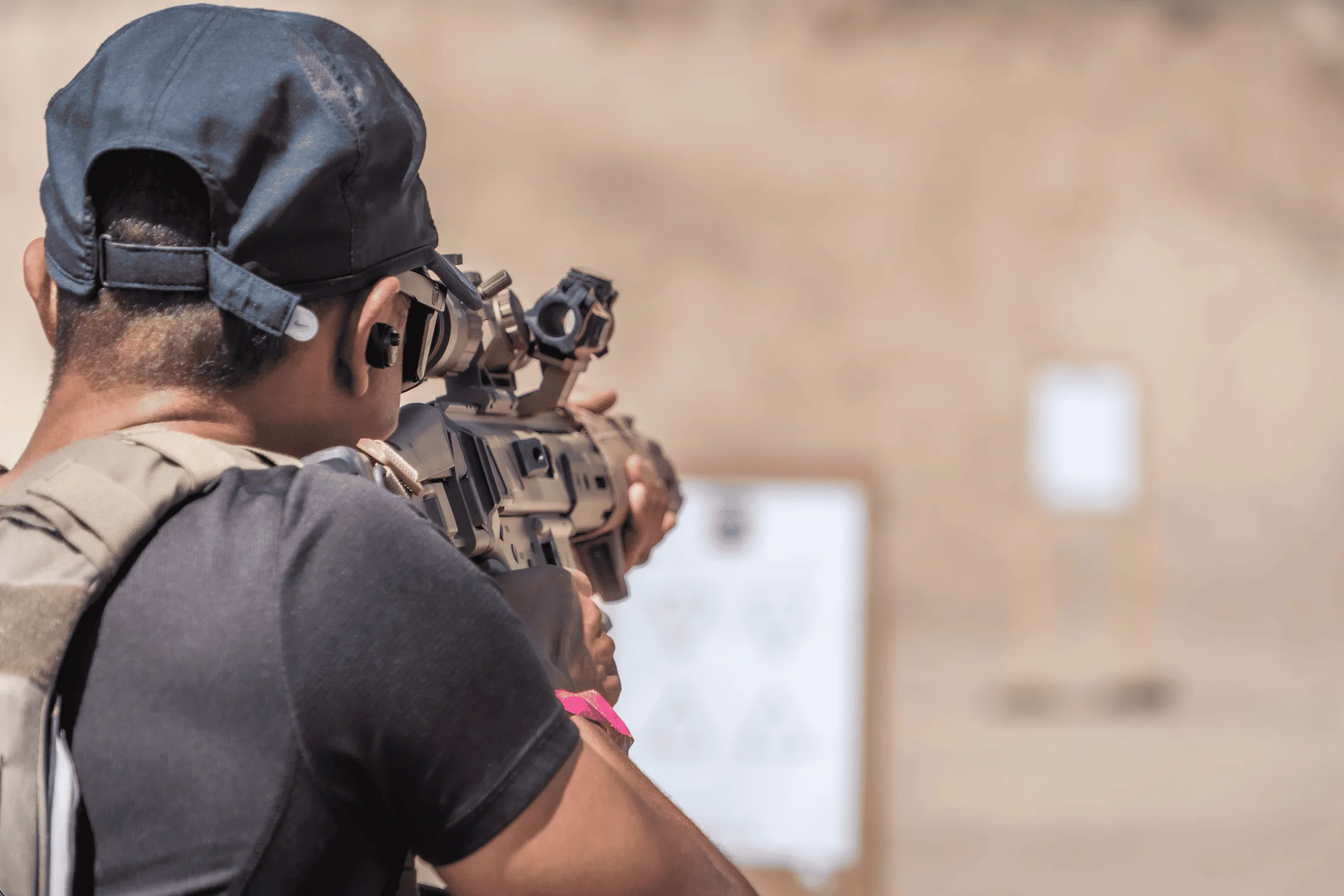
The Operator’s Fit: A properly adjusted telescoping stock should allow your shooting-hand thumb to rest naturally over or near the safety selector, while the pad of your index finger—not the joint or the tip—sits square on the trigger face.
-
The Body Armor Factor: If you train with a plate carrier or chest rig, you will need to shorten your LOP by one or two clicks on your receiver extension to maintain the same pocket fit and eye relief.
Optimizing Your Optical System & Setup Checklist
Before sending lead downrange, utilize this structural checklist to ensure your system is ready:
Our specialized infrastructure supports your setup phase. Cowtown Range features individual, platform-specific shooting bays designed for pistols, carbines, and shotguns. This dedicated layout lets you test and refine your mechanical setup under zero-pressure, highly focused conditions.
2. Technical Pillars: Execution and Real-World Application
Once your platform is physically optimized, consistent execution of the fundamentals is what bridges the gap between static accuracy and dynamic proficiency.
The Master Grip
Your grip is your direct physical interface with the carbine.
-
Support-Hand Drive: Reach your support hand as far forward on the handguard as comfortably possible (often utilizing a C-clamp grip or hand-stop). This allows you to drive the muzzle rapidly from target to target and effectively mitigate vertical recoil.
-
Isolation of the Trigger Finger: Your firing hand grip should be firm, but your trigger finger must remain completely isolated. Tension in your hand shouldn’t bleed into your trigger pull. Pull straight to the rear, feel the reset, and avoid “slapping” the trigger.
Translating Repetition into Stress-Proof Muscle Memory
Under acute stress, your fine motor skills degrade. Complex movements must be broken down and repeated until they become subconscious, reflexive actions.
-
Dry-Fire Discipline: Perfecting your high-ready to low-ready presentations, emergency reloads, and tactical reloads in a dry environment builds the neural pathways needed when the timer is ticking.
-
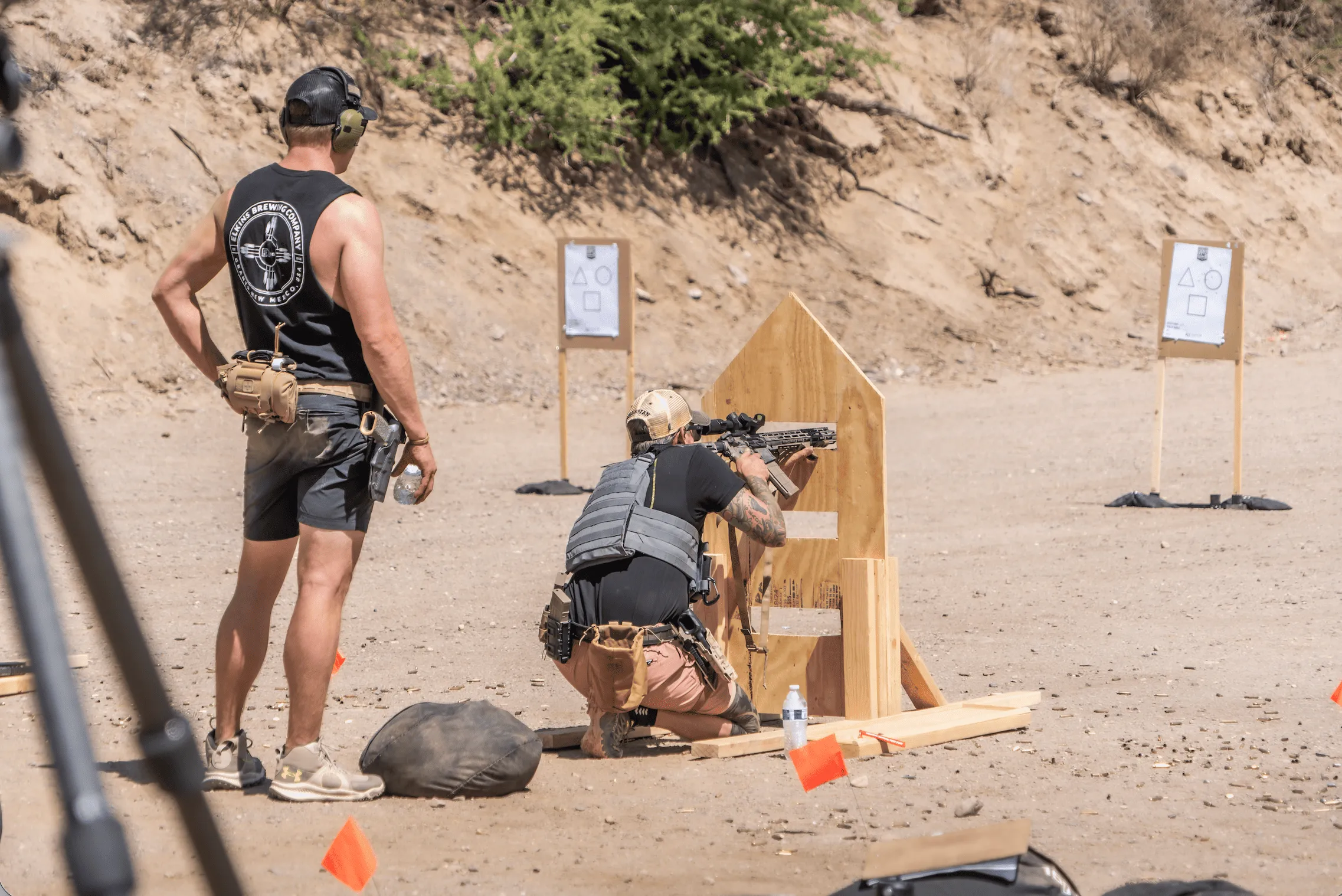
Dynamic Terrain Training: Static ranges build a baseline, but the real world isn’t flat. Cowtown’s rugged, off-grid high-desert terrain is specifically utilized to stress-test your shooting mechanics. Maneuvering through natural elevation changes, shooting around physical barricades, and navigating low-light environments will immediately expose any weaknesses in your handling fundamentals.
If you want dedicated, one-on-one professional feedback to perfect these mechanics, schedule a session with our elite cadre of instructors through our Private Training.
3. The Golden Rules: Safety as a Training Enabler
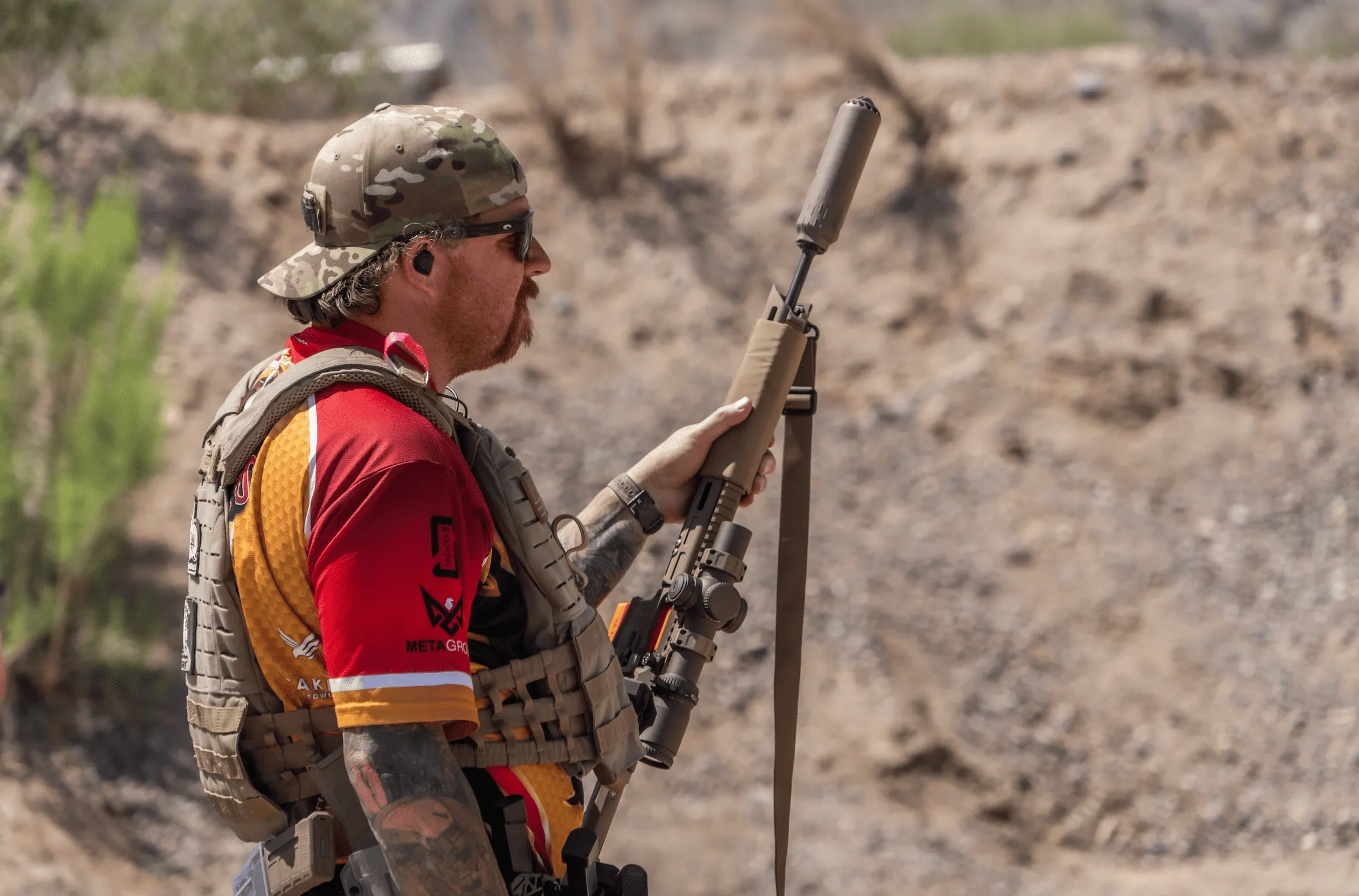
We treat our shooters like adults so they can train like professionals. True self-governance on the range requires an absolute, unyielding commitment to safety. Safety rules aren’t designed to limit your training; they are the guardrails that allow us to run dynamic, high-level tactical scenarios safely.
The Core Rules of Safe Carbine Handling
-
Muzzle Discipline: Always keep your muzzle pointed in a safe direction. On our bays, this means downrange at all times. If you are moving, transitioning, or clearing a malfunction, your muzzle awareness must be absolute.
-
Finger Off the Trigger: Keep your finger indexed straight along the receiver, completely outside the trigger guard, until your sights are aligned with the target and you have made the conscious decision to fire.
-
Status Awareness: Treat every system as if it is loaded. Constantly maintain visual and physical verification of your platform’s condition.
-
Target Verification: Always be certain of your target and maintain 360-degree awareness of what lies behind, beside, and between you and your objective.
Own Your Progression: Elevate Your Training
Unstructured practice on a static lane can silently reinforce inefficient habits or mask critical errors. Real progression demands dynamic application, variable conditions, and an environment that challenges your platform setup and shooting stance under movement.
At Cowtown Range, we don’t just hand you a set of restrictive rules; we give you the latitude to train like a professional while providing access to world-class tactical instructors who have run these systems in the most demanding real-world conditions. Don’t let your hard-earned skills become perishable.
Ready to escape the micromanagement of traditional commercial ranges and join a dedicated community of experienced shooters? Learn How to Become a Cowtown Range Member and claim your access to Arizona’s premier high-desert tactical playground.
Carbine Handling FAQ
What is the single most critical carbine safety rule?
Keeping the muzzle pointed in a safe direction at all times is the most fundamental rule. Absolute muzzle discipline ensures that even in the highly unlikely event of an accidental discharge, the round is sent safely into a berm or downrange, preventing injury.
How do I accurately adjust my carbine’s length of pull?
Adjust your telescoping stock so that when the rifle is mounted securely in your shoulder pocket, your dominant thumb easily manipulates the safety selector, and the pad of your index finger rests flat and square on the trigger face. If you are wearing body armor, you will generally need to shorten the stock by one or two positions.
What carbine classes does Cowtown Range offer?
Cowtown Range offers a progressive pipeline of carbine training:
-
Carbine 1 – Carbine Fundamentals: Focuses on marksmanship, system manipulation, and clearing malfunctions.
-
Carbine 2 – Dynamic Shooting: Introduces shooting on the move, target transitions, and barrier work.
-
Carbine 3 – Defensive Carbine: Advanced scenarios involving space management, barricades, and target engagement from 200 to 700 yards.
-
Low-Light Carbine: Teaches weapon-mounted light integration, photonic barriers, and low-light movement.
-
Intro to Scoped Carbine: Covers LPVO/MPVO setup, eye relief, diopter adjustments, and gathering DOPE out to 700 yards.